
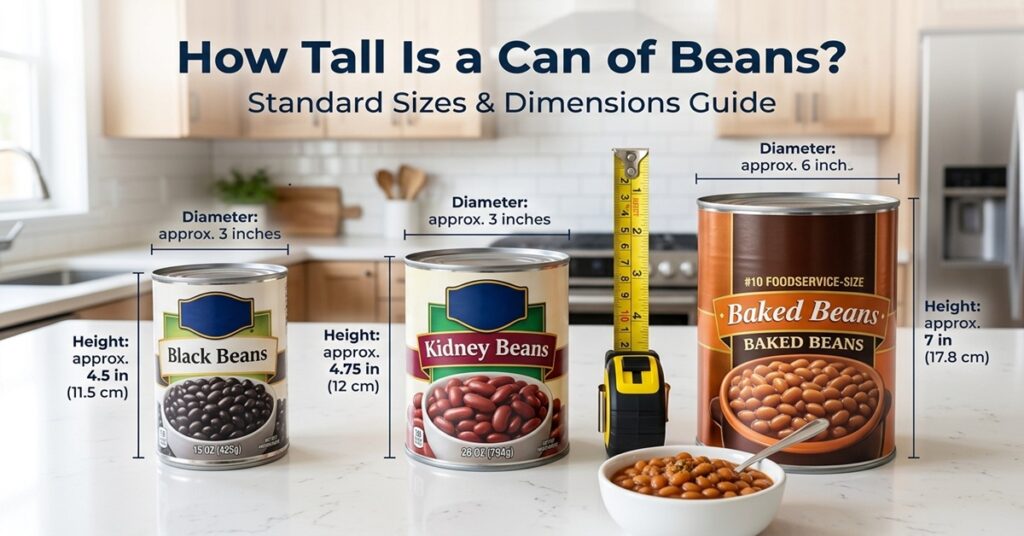

How tall is a can of beans? A standard can of beans is typically about 4 to 4.5 inches (10–11.5 cm) tall, although the exact height depends on the can size and brand. Most grocery-store bean cans hold 15 –16 ounces and measure around 4.4 inches high with a diameter of 3 inches, making them one of the most common food can sizes found in kitchens and pantries.
Whether you’re organizing shelves, planning food storage, comparing packaging dimensions, or simply curious about can measurements, understanding bean can dimensions can be surprisingly useful. This guide explains the height, diameter, capacity, and common sizes of bean cans, along with practical storage and packaging insights.
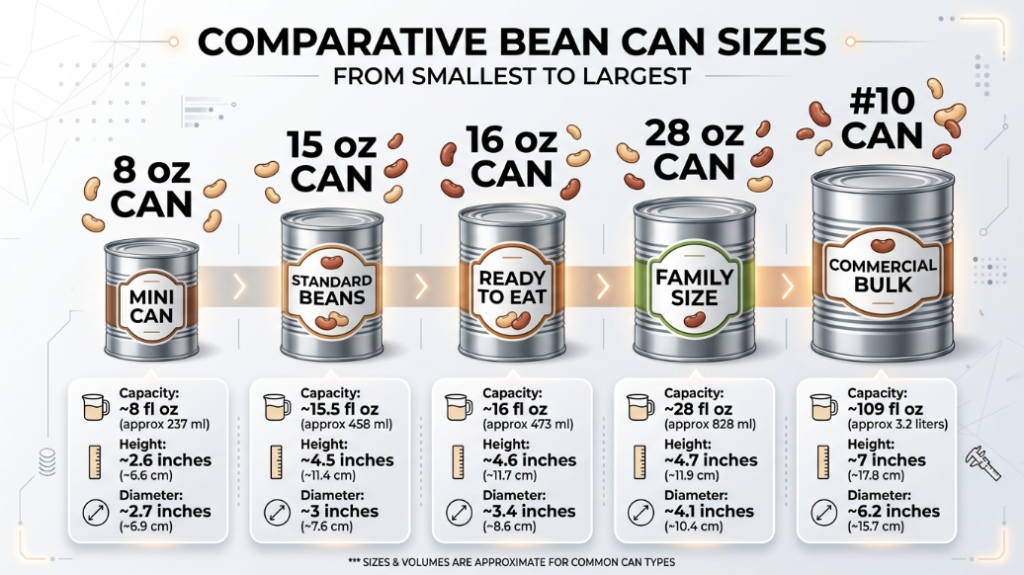
Standard Can of Beans Height Chart
The easiest way to understand bean can dimensions is through a comparison chart.
Bean Can Size Comparison Table
| Can Size | Height | Diameter | Capacity | Common Uses |
|---|---|---|---|---|
| 8 oz Can | 2 inches (51 mm) | 3.44 inches (87 mm) | 1 cup | Small portions, sauces |
| 15 oz Can | 4.4 inches (112 mm) | 3 inches (76 mm) | 1.9 cups | Standard canned beans |
| 16 oz Can | 4.4 inches (112 mm) | 3.19 inches (81 mm) | 2 cups | Beans, vegetables |
| 28 oz Can | 4.7 inches (119 mm) | 4.06 inches (103 mm) | 3.5 cups | Family-size servings |
| #10 Can | 7 inches (178 mm) | 6.19 inches (157 mm) | 12–13 cups | Restaurants and foodservice |
What Is the Most Common Can Size for Beans?
The most common canned bean size sold in American grocery stores is the 15-ounce can.
This size strikes a balance between:
- Household meal portions
- Affordable pricing
- Shelf efficiency
- Shipping costs
- Convenient storage
Most brands package black beans, pinto beans, kidney beans, and chickpeas in cans measuring approximately 4.25–4.5 inches tall.
How Tall Is a Standard 15 oz Can of Beans?
When people ask, “How tall is a can of beans?” they’re usually referring to a standard 15-ounce can.
Exact Height and Diameter
A typical 15-ounce bean can measures:
| Measurement | Size |
|---|---|
| Height | 4.4 inches (112 mm) |
| Diameter | 3 inches (76 mm) |
| Capacity | 15–16 oz |
| Cups | Approximately 1.75–2 cups |
Metric conversions:
- Height: 11.2 cm
- Diameter: 7.6 cm
Because manufacturers follow standardized food packaging dimensions, these measurements remain remarkably consistent across brands.
Why 15 oz Bean Cans Became the Standard
Several factors contributed to the popularity of this size:
Portion Control
A 15-ounce can provides enough beans for:
- 3–4 side servings
- 2 main-course servings
- A large batch of soup or chili
Transportation Efficiency
Food manufacturers can fit more standardized cans into shipping cartons and pallets, reducing transportation costs.
Shelf Space Optimization
Retailers prefer dimensions that maximize product visibility while minimizing wasted shelf space.
Standardized can sizes help manufacturers, distributors, and retailers streamline inventory management and packaging operations.
Bean Can Dimensions by Popular Bean Types
One common misconception is that different bean varieties come in different-sized cans.
In reality, most use the same container dimensions.
Black Bean Can Dimensions
Most black beans are sold in:
- 15 oz cans
- Height: 4.4 inches
- Diameter: 3 inches
The dimensions remain largely unchanged regardless of brand.
Pinto Bean Can Dimensions
Pinto beans typically use:
- Standard 15–16 oz packaging
- Height around 4.4 inches
- Diameter between 3 and 3.2 inches
Kidney Bean Can Dimensions
Kidney beans generally come in:
- 15 oz cans
- 28 oz family-size cans
- Commercial #10 cans
Standard retail cans maintain nearly identical cylinder dimensions.
Garbanzo (Chickpea) Can Dimensions
Chickpeas usually appear in:
- 15 oz cans
- Height: approximately 4.4 inches
- Diameter: approximately 3 inches
Baked Bean Can Dimensions
Baked beans sometimes use slightly taller containers due to sauce volume.
Common dimensions include:
- Height: 4.5–4.75 inches
- Diameter: 3 inches
Despite minor variations, they remain close to standard food can dimensions.
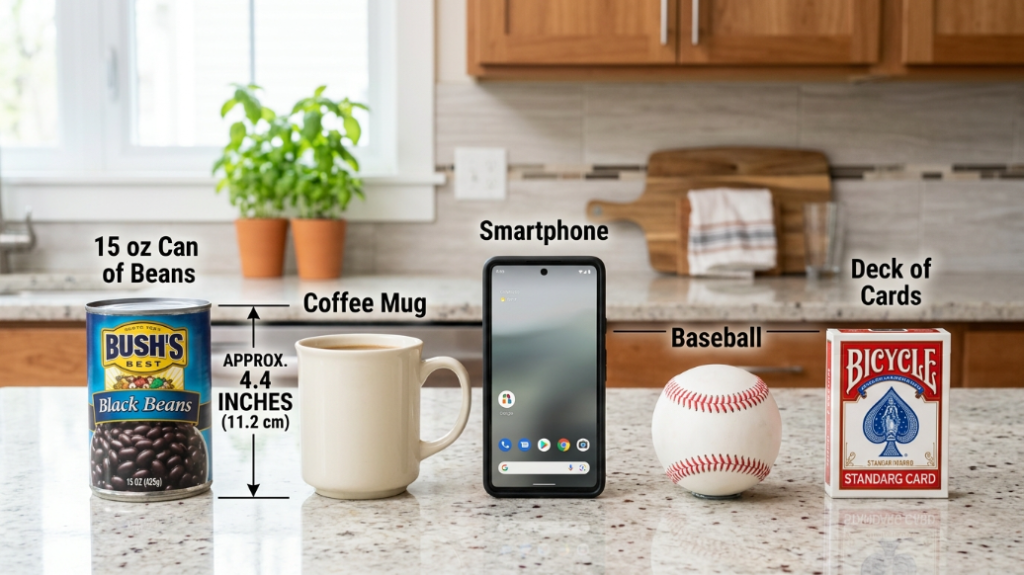
Visualizing the Height of a Can of Beans
Numbers can be difficult to picture. Comparing a bean can to everyday objects makes it easier.
Everyday Objects About the Same Height
A standard bean can is approximately the same height as:
- A coffee mug
- A large baseball
- A deck of cards stacked vertically
- A smartphone standing upright
- A travel-size water bottle
These comparisons help when estimating storage requirements without a ruler.
How Tall Is a Can of Beans in Centimeters?
| Can Type | Height (cm) |
|---|---|
| 8 oz Can | 5.1 cm |
| 15 oz Can | 11.2 cm |
| 16 oz Can | 11.1 cm |
| 28 oz Can | 11.9 cm |
| #10 Can | 17.8 cm |
For readers outside the United States, these metric measurements provide a more familiar reference.
How Bean Can Dimensions Affect Storage Space
Understanding can height matters when organizing kitchens and food storage systems.
Pantry Shelf Planning
A shelf designed for canned foods should provide:
- At least 5 inches of vertical clearance
- Easy label visibility
- Access without stacking too high
Most standard bean cans fit comfortably on shelves spaced 6–8 inches apart.
Emergency Food Storage Considerations
Emergency preparedness experts often recommend storing several weeks or months of shelf-stable foods.
Bean cans are popular because they offer:
- Long shelf life
- High protein content
- Minimal preparation requirements
Knowing exact can dimensions helps maximize storage efficiency.
For example:
- Twenty-four standard bean cans occupy significantly less space than bulk dry bean containers.
- Uniform cylinder dimensions make stacking easier.
Bulk Purchasing and Storage
Warehouse clubs often sell bean cans in cases of 12 or 24.
Storage planning should account for:
- Shelf depth
- Shelf weight limits
- Air circulation
- Rotation accessibility
A standard case of twenty-four bean cans typically requires approximately one cubic foot of storage space.
Food Can Measurement System Explained
Many people notice codes such as 300, 303, or 307×308 on food packaging specifications and wonder what they mean.
Understanding Can Diameter and Height Codes
Food cans often use a coding system based on sixteenths of an inch.
For example:
- 303 = 3 3/16 inches diameter
- 307 = 3 7/16 inches diameter
A can listed as 307 × 308 means:
- Diameter: 3 7/16 inches
- Height: 3 8/16 inches (3.5 inches)
These measurements originated decades ago and remain standard throughout the food packaging industry.
Why Manufacturers Use Can Codes
The coding system provides:
- Manufacturing consistency
- Equipment compatibility
- Quality control
- Efficient inventory management
Standardization reduces errors across production facilities and supply chains.
Bean Can Sizes Around the World
Food can dimensions vary between countries.
United States Standard Bean Cans
Common retail sizes include:
| Capacity | Typical Height |
|---|---|
| 15 oz | 4.4 inches |
| 16 oz | 4.4 inches |
| 28 oz | 4.7 inches |
European Bean Can Sizes
European manufacturers frequently use metric packaging:
- 400g cans
- 425g cans
- 500g cans
Many are similar in height to American cans but may differ slightly in diameter.
Metric Can Dimensions (250ml, 400ml, 500ml)
| Capacity | Height | Diameter |
|---|---|---|
| 250ml | 4 inches | 2.5 inches |
| 400ml | 4.3 inches | 3 inches |
| 500ml | 4.5 inches | 3 inches |
Why International Sizes Differ
Differences often result from:
- Consumer purchasing habits
- Manufacturing equipment
- Packaging regulations
- Historical standards
Despite these variations, most food cans maintain similar proportions.
Commercial Bean Can Heights and Dimensions
Restaurants and institutional kitchens require larger capacities than households.
#2 Can Dimensions
Typical measurements:
- Height: 3.5 inches
- Diameter: 3.44 inches
- Capacity: 13–16 oz
#2.5 Can Dimensions
Measurements:
- Height: 4.69 inches
- Diameter: 4.06 inches
- Capacity: 26–28 oz
#10 Can Dimensions
The foodservice standard:
| Measurement | Size |
|---|---|
| Height | 7 inches |
| Diameter | 6.19 inches |
| Capacity | 100–105 oz |
| Cups | 12–13 cups |
Restaurant and Foodservice Uses
Commercial kitchens rely on #10 cans because they:
- Lower cost per serving
- Reduce packaging waste
- Simplify inventory management
- Improve storage efficiency
Common users include:
- Restaurants
- Schools
- Hospitals
- Hotels
- Catering businesses
Factors That Can Change a Can of Beans’ Height
Although can sizes are standardized, slight differences exist.
Brand-to-Brand Variations
Different manufacturers may alter:
- Lid design
- Bottom profile
- Seaming method
- Wall thickness
These changes can affect dimensions by a few millimeters.
Two-Piece vs. Three-Piece Can Construction
Modern food cans generally use one of two designs.
Two-Piece Can Design
Features:
- Seamless body
- Better pressure resistance
- Consistent dimensions
Three-Piece Can Design
Features:
- Separate side seam
- More flexible manufacturing
- Lower tooling costs
Both styles remain widely used.
Manufacturing Tolerances
Most can manufacturers allow:
- 1–2 mm dimensional variation
- Minor differences in wall thickness
- Slight seam height variations
These tolerances ensure compatibility with filling and sealing equipment.
Labeling and Seaming Differences
Decorative labels and seam profiles sometimes make cans appear taller even when actual dimensions remain nearly identical.
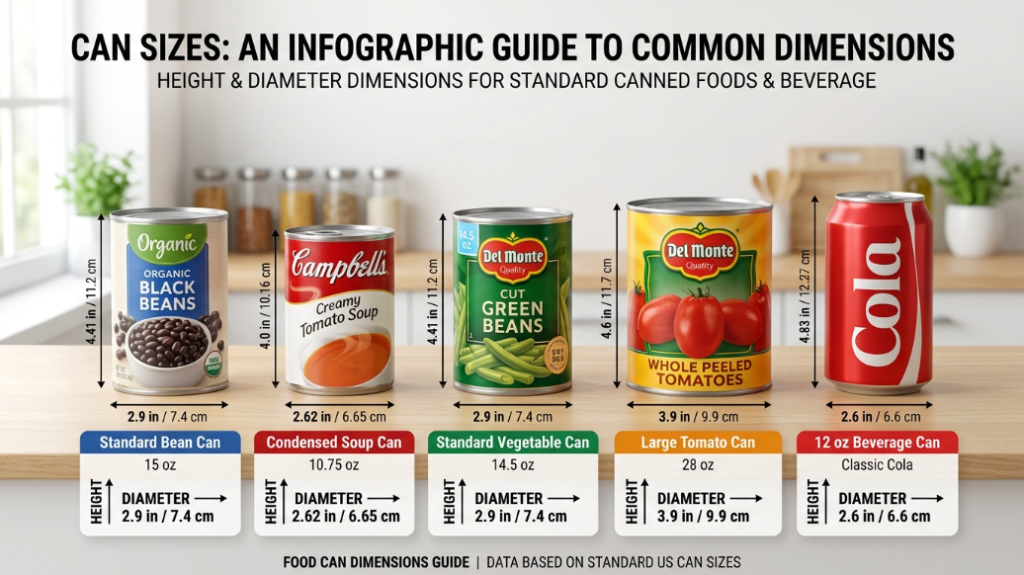
Bean Can Height vs Other Common Food Cans
Understanding how bean cans compare with other food containers provides useful context.
Comparison Table
| Product | Height | Diameter |
|---|---|---|
| Bean Can (15 oz) | 4.4 in | 3 in |
| Soup Can | 4.25 in | 3 in |
| Vegetable Can | 4.4 in | 3 in |
| Tomato Can | 4.38 in | 3.19 in |
| Beverage Can (12 oz) | 4.83 in | 2.6 in |
Beans vs Soup Cans
Dimensions are nearly identical because both products often use the same packaging equipment.
Beans vs Vegetable Cans
Many canned vegetables share identical food can dimensions with beans.
Beans vs Tomato Cans
Tomato cans may be slightly wider due to product density and packaging preferences.
Beans vs Beverage Cans
Beverage cans are generally taller and narrower because their design optimizes vending machine compatibility and carbonation resistance.
How to Measure a Can of Beans Correctly
Accurate measurements are important for storage planning and packaging analysis.
Tools You Can Use
Useful tools include:
- Measuring tape
- Digital calipers
- Ruler
- Kitchen scale
Measuring Height
Measure:
- From the bottom rim
- To the highest point of the top seam
Do not include stacking features or external packaging.
Measuring Diameter
Measure across the widest point of the can body.
Avoid measuring the lid because it may extend slightly beyond the sidewall.
Calculating Approximate Capacity
A cylinder’s volume can be estimated using:
Volume = π × radius² × height
Manufacturers use more precise calculations that account for seam geometry and internal shape.
Interesting Facts About Bean Can Packaging
Food can engineering has evolved dramatically over the last century.
Why Most Bean Cans Are Cylindrical
The cylindrical shape offers several advantages:
- Even pressure distribution
- Strong structural integrity
- Efficient stacking
- Lower material usage
Engineers consider it one of the most efficient packaging shapes available.
How Can Dimensions Improve Shelf Life
Metal cans protect food from:
- Oxygen
- Moisture
- Light
- Contaminants
Proper dimensions also ensure effective heat processing during sterilization.
The Evolution of Modern Food Can Sizes
The modern food can industry traces its roots to the early 1800s.
Over time, manufacturers standardized dimensions to improve:
- Production efficiency
- Transportation logistics
- Consumer convenience
Today’s food can measurement system remains heavily influenced by these historical standards.
Sustainability and Material Efficiency in Food Packaging
Steel and aluminum food cans are among the most recycled packaging materials worldwide.
Benefits include:
- High recycling rates
- Reduced food waste
- Long shelf life
- Efficient transportation
Their standardized dimensions further improve manufacturing efficiency and reduce resource consumption.
Frequently Asked Questions
How tall is a standard can of beans?
A standard 15-ounce can of beans is usually about 4.4 inches (11.2 cm) tall and 3 inches in diameter.
How tall is a Heinz bean can?
A typical Heinz Beanz can is about 4.3–4.5 inches (11–11.5 cm) tall, depending on the can size and market.
How tall is a standard tin can?
Most standard food tin cans measure around 4–4.5 inches (10–11.5 cm) tall, though sizes vary by product.
What is the most common can size?
The most common food can size is the 15–16 oz can, often used for beans, vegetables, and soups.
How much is a standard can of beans?
A standard can of beans typically contains 15–16 ounces (425–454 grams), or about 1.75–2 cups.
What size is a number 2 can of beans?
A #2 can is usually 3.5 inches tall and 3.4 inches in diameter, holding about 13–16 ounces of food.
Final Thoughts
So, how tall is a can of beans? The answer depends on the can size, but the standard grocery-store bean can is usually around 4.4 inches (11.2 cm) tall and 3 inches (7.6 cm) in diameter. Larger family-size and commercial cans can be significantly taller and wider, while smaller specialty cans may be shorter.
Understanding bean can dimensions helps with pantry organization, emergency food storage, meal planning, commercial kitchen management, and packaging comparisons. Whether you’re storing a few cans at home or managing large food inventories, knowing standard can height, diameter, and capacity measurements makes planning easier and more efficient.