


When you hold an energy drink, you rarely stop to think about the engineering behind the vessel. Yet, the exact physical layout of your favourite energy drink is a marvel of modern packaging design.
Knowing the specific Red Bull can dimensions helps you understand how global manufacturing, refrigeration standards, and user ergonomics all collide in a single metal cylinder. Whether you are designing custom coolers, studying container physics, or simply curious about what holds your caffeine fix, getting familiar with these measurements offers a fresh perspective on a familiar object.
Manufacturers engineer every millimeter of these containers for grip, stackability, and optimal liquid volume. Different global markets and product lines introduce unique variations that change how the beverage feels in your hand. Let’s look closely at the exact specifications that define these iconic aluminum cylinders.
Standard Red Bull Can Sizes and Capacities

Red Bull produces several distinct container capacities to cater to different drinking habits and regional regulations. The most common global size is the standard 250 ml container, often recognised as the classic slim format that launched the brand.
In North America, the 8.4 fl oz and 12 fl oz variants dominate convenience store shelves. Meanwhile, larger formats like the 355 ml and 473 ml cans provide extended energy boosts for high-demand consumers.
Each capacity requires a tailored aluminum shell thickness to withstand internal carbonation pressure safely. Internal pressure typically ranges between 30 and 40 psi, meaning the metal must remain strong while keeping overall weight to a minimum. Brand designers carefully calculate these volumes so that the liquid-to-air ratio inside prevents bursting during transit and temperature fluctuations.
| Capacity (Metric) | Capacity (Imperial) | Approximate Height | Base Diameter |
|---|---|---|---|
| 250 ml | 8.4 fl oz | 135 mm (5.3 inches) | 50 mm (1.97 inches) |
| 355 ml | 12 fl oz | 148 mm (5.8 inches) | 58 mm (2.28 inches) |
| 473 ml | 16 fl oz | 168 mm (6.6 inches) | 58 mm (2.28 inches) |
| 355 ml (Tall) | 12 fl oz (Slim) | 164 mm (6.45 inches) | 53 mm (2.08 inches) |
Height and Diameter Breakdown for Popular Variants
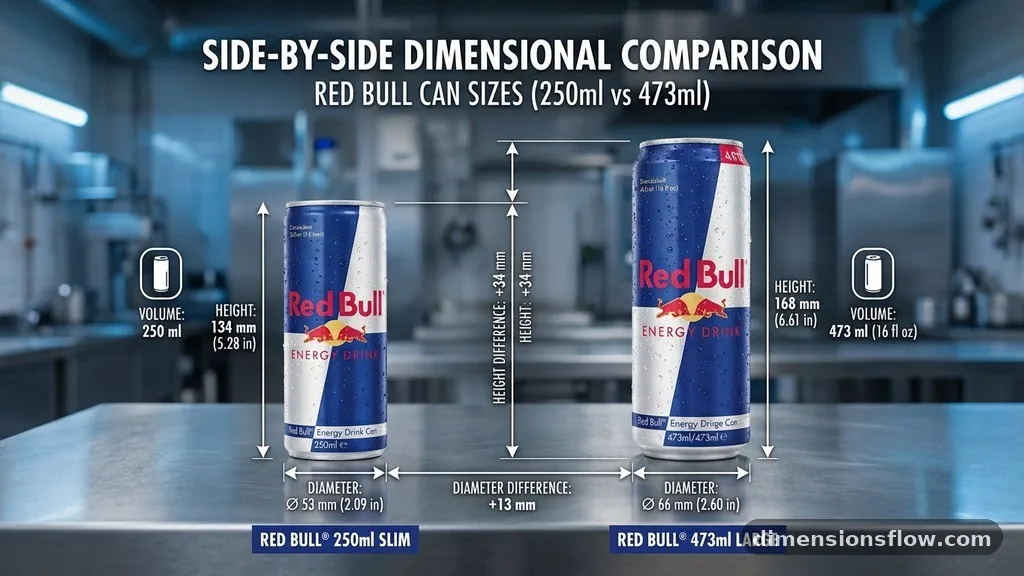
Height and diameter dictate the ergonomics of holding and drinking from an aluminum cylinder. The iconic 250 ml slim format relies on a narrower base diameter of roughly 50 mm, which makes it remarkably comfortable for smaller hands. As you step up to the 355 ml and 473 ml variants, the base diameter increases slightly, but the primary expansion happens vertically.
The slender profile is a deliberate marketing and manufacturing choice. Taller, narrower vessels chill faster in vending machines and refrigerated display cases because of the increased surface-area-to-volume ratio. They also command more vertical visual space on crowded retail shelves, drawing your eye immediately.
- Slim Profile Advantage: A narrower diameter enhances grip security and fits standard automobile cup holders effortlessly.
- Aluminum Gauge: Thinner sidewalls save millions of tons of metal globally while maintaining structural integrity through advanced dome design at the bottom.
- Lid Reductions: Smaller top ends require less aluminum for the pull-tab lid, reducing overall material waste during the stamping process.
- Stacking Tolerance: Precision manufacturing ensures that the indented base of one unit locks securely onto the rim of the unit directly below it.
Manufacturing Tolerances and Material Specifications

Creating millions of identical metal cylinders requires extreme engineering precision. Plants stamp these containers from a single coil of aluminum alloy, usually designated as 3104 or 5182, which provides the ideal balance of formability and tensile strength. The metal sheet goes through deep drawing and wall ironing processes that stretch the aluminum into a thin, seamless tube.
The wall thickness near the center of the cylinder often measures less than 0.1 mm, while the top rim and bottom dome remain significantly thicker to handle structural stress. This clever gradient prevents structural failure while minimizing material costs. Once formed, internal polymer coatings spray the interior to stop the acidic beverage from reacting directly with the bare metal.
Advanced Questions and Structural Gaps
Curious minds often wonder how these precise measurements impact global shipping logistics and recycling efficiency. Because standardizing container sizes allows pallet layers to maximize space, shipping trucks carry thousands of units without wasted gaps. The uniform tapering on slim variants also allows automated sorting facilities to process mixed aluminum scrap with high accuracy.
Another common query involves why certain regions use distinct volume metrics. Legal weights and measures standards dictate local packaging rules, requiring exact fluid disclosures that vary slightly between European metric standards and American imperial fluid ounces. Despite these regional label differences, the underlying machinery in packaging plants adjusts seamlessly to handle minor shifts in metal stamping depths.
Conclusion
Understanding Red Bull can dimensions reveals how much thought goes into an item you likely toss into the recycling bin without a second glance. From calculated wall thicknesses to ergonomic diameters, every physical attribute serves a distinct logistical and marketing purpose.
Next time you crack open your favorite flavor, you will know the exact engineering feat sitting in your hand. Feel free to share your thoughts or questions about packaging design in the comments below.