
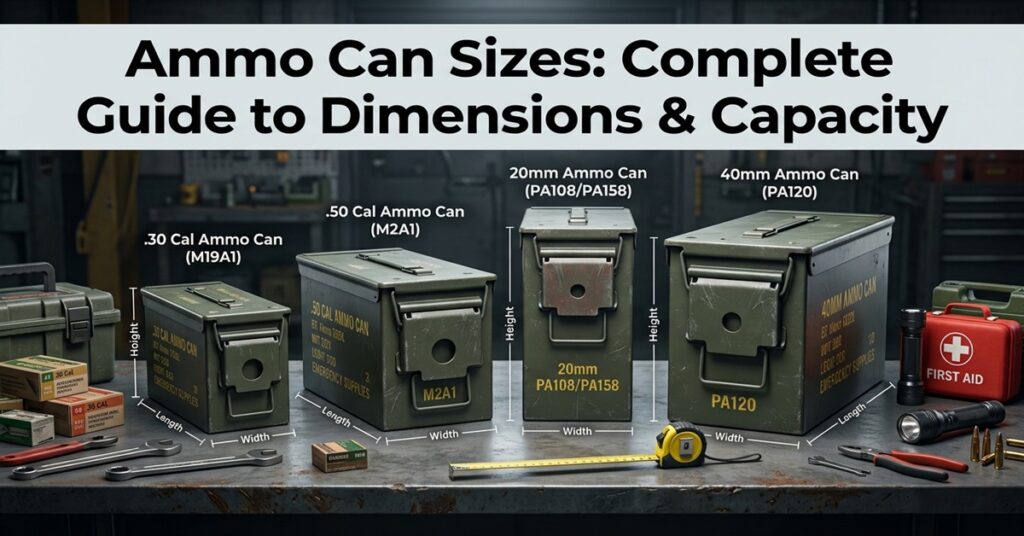

Ammo cans have earned a reputation as one of the most durable and reliable storage solutions available. Originally designed for military use, these rugged steel containers are now used for everything from ammunition storage and emergency preparedness to tool organization and outdoor gear protection.
However, not all ammo cans are the same size. Choosing the right ammo can size can make a significant difference in storage efficiency, portability, and long-term protection of your equipment.
Whether you’re storing ammunition, building an emergency kit, or organizing tools in your workshop, understanding ammo can dimensions helps you select the best option for your specific needs.
In this guide, we’ll explore the most common ammo can sizes, compare capacities, examine military and commercial variations, and help you determine which ammo can works best for your storage goals.
Ammo Can Sizes at a Glance
Before diving into individual models, here’s a quick comparison of the most common ammo can sizes available today.
Standard Ammo Can Dimensions Comparison Table
| Ammo Can Type | Exterior Dimensions (L × W × H) | Interior Dimensions (L × W × H) | Empty Weight |
|---|---|---|---|
| M19A1 (.30 Cal) | 11.75″ × 3.75″ × 7″ | 10″ × 3.5″ × 6.5″ | 3.7 lbs |
| M2A1/M2A2 (.50 Cal) | 11.75″ × 6″ × 7.5″ | 11″ × 5.5″ × 7″ | 5.2 lbs |
| .50 Cal Fat | ~12″ × 7″ × 8.5″ | Varies | Varies |
| .50 Cal Tall | ~11.75″ × 6″ × 10″ | Varies | Varies |
| M548 (20mm) | 18.75″ × 8.5″ × 14.5″ | 17.25″ × 7.5″ × 14″ | 19.8 lbs |
| M116A2 (40mm) | 18.25″ × 6″ × 9.75″ | 17.25″ × 5.5″ × 9.5″ | 14 lbs |
These dimensions provide a helpful starting point when comparing storage capacity and portability.
Which Ammo Can Size Is Most Popular?
The .50 caliber ammo can remains the most popular option among civilians, military surplus enthusiasts, and outdoor users.
Its popularity comes from a combination of:
- Excellent storage capacity
- Manageable weight
- Easy stacking
- Wide availability
- Affordable pricing
Many preparedness experts consider the .50 cal ammo can the best all-around size because it balances portability and storage volume exceptionally well.
Understanding Ammo Can Measurements
Many buyers focus solely on outside dimensions, but interior measurements are often more important.
Exterior vs Interior Dimensions
Every ammo can has thick steel walls and a rubber gasket designed to create a weather-resistant seal.
As a result:
- Exterior dimensions determine shelf space requirements.
- Interior dimensions determine actual storage capacity.
For example, a standard .50 cal ammo can measures 11.75″ × 6″ × 7.5″ externally, but the usable interior space is closer to 11″ × 5.5″ × 7″.
That difference can significantly impact what fits inside.
How Ammo Can Capacity Is Measured
Storage capacity depends on several factors:
- Interior dimensions
- Shape of stored items
- Loose versus boxed ammunition
- Weight limitations
- Organization accessories
While cubic volume provides a useful estimate, actual capacity varies depending on how efficiently items are packed.
Why Similar-Sized Ammo Cans Hold Different Amounts
Two containers with nearly identical dimensions may store very different quantities.
Reasons include:
- Cartridge shape
- Packaging type
- Magazine storage
- Dividers and foam inserts
- Internal design features
A can packed with loose 9mm rounds will hold substantially more ammunition than one filled with boxed cartridges.
.30 Cal Ammo Can Size (M19A1)
The M19A1 .30 caliber ammo can is one of the most widely recognized military surplus containers.
Exact Dimensions and Specifications
| Specification | Measurement |
|---|---|
| Exterior Length | 11.75 inches |
| Exterior Width | 3.75 inches |
| Exterior Height | 7 inches |
| Interior Length | 10 inches |
| Interior Width | 3.5 inches |
| Interior Height | 6.5 inches |
| Empty Weight | 3.7 lbs |
Its narrow profile makes it ideal for tight storage spaces.
What Fits Inside a .30 Cal Ammo Can?
Approximate capacities include:
| Ammunition Type | Capacity |
|---|---|
| 9mm | 1,200 rounds |
| .45 ACP | 770 rounds |
| 5.56/.223 | 600 rounds |
| .308 Win | 320 rounds |
| 12 Gauge | 140 shells |
Actual numbers vary depending on packaging and manufacturer specifications.
Best Uses Beyond Ammunition Storage
The .30 cal ammo can has become popular for numerous storage applications.
Common uses include:
- Vehicle emergency kits
- Camping gear
- Electronics protection
- Fishing tackle
- Medical supplies
- Portable tool kits
Its smaller size makes transportation convenient while still offering excellent durability.
Pros and Cons of the .30 Cal Ammo Can
Pros
- Lightweight
- Easy to carry
- Affordable
- Fits smaller spaces
Cons
- Limited storage volume
- Less efficient for bulk ammunition storage
.50 Cal Ammo Can Size (M2A1 and M2A2)
If one ammo can size dominates the market, it’s the .50 caliber can.
Standard .50 Cal Ammo Can Dimensions
| Specification | Measurement |
|---|---|
| Exterior Length | 11.75 inches |
| Exterior Width | 6 inches |
| Exterior Height | 7.5 inches |
| Interior Length | 11 inches |
| Interior Width | 5.5 inches |
| Interior Height | 7 inches |
| Empty Weight | 5.2 lbs |
The wider design nearly doubles storage capacity compared to a .30 cal can.
M2A1 vs M2A2: What’s the Difference?
The dimensions are nearly identical.
The primary difference is the latch assembly.
The M2A2 includes:
- Reinforced latch support
- Improved gasket protection
- Better long-term stacking durability
These improvements help maintain the waterproof seal under heavy storage conditions.
Real-World Capacity Guide
| Ammunition Type | Approximate Capacity |
|---|---|
| 9mm | 2,200 rounds |
| .40 S&W | 1,750 rounds |
| .45 ACP | 1,300 rounds |
| 5.56/.223 | 1,200 rounds |
| .308 Win | 640 rounds |
| 12 Gauge | 250 shells |
Why the .50 Cal Ammo Can Is So Versatile
The .50 cal size offers an ideal balance of:
- Capacity
- Weight
- Stackability
- Durability
For many users, one .50 cal can can replace multiple smaller storage containers.
Pros and Cons of the .50 Cal Ammo Can
Pros
- Large capacity
- Excellent organization
- Easy to stack
- Widely available
Cons
- Heavier when full
- Less portable than .30 cal models
Specialty Ammo Can Sizes
Not everyone needs standard military dimensions.
Specialty ammo cans offer solutions for unique storage requirements.
.50 Cal Fat Ammo Can
The Fat .50 Cal model increases width and height.
Approximate dimensions:
- Length: 12 inches
- Width: 7 inches
- Height: 8.5 inches
Benefits include:
- Greater storage volume
- Better bulk item storage
- Improved organization options
.50 Cal Tall Ammo Can
The Tall .50 Cal model prioritizes vertical space.
Approximate dimensions:
- Length: 11.75 inches
- Width: 6 inches
- Height: 10 inches
Ideal for:
- Long tools
- Cleaning rods
- Emergency equipment
- Documents
SAW Ammo Can Sizes
The Squad Automatic Weapon (SAW) ammo can is commonly used for linked ammunition but has become popular among civilians.
Typical dimensions:
- Length: 12 inches
- Width: 7 inches
- Height: 8 inches
Its wide shape accommodates bulky items efficiently.
Linked Ammo Can Variations
Specialized military ammunition containers may feature:
- Reinforced handles
- Modified interior shapes
- Enhanced stacking features
- Larger storage compartments
These variations serve highly specific military and industrial purposes.
Large Military Ammo Can Sizes
For maximum capacity, larger military ammo cans provide unmatched storage volume.
M548 20mm Ammo Can Dimensions
| Specification | Measurement |
|---|---|
| Exterior Length | 18.75 inches |
| Exterior Width | 8.5 inches |
| Exterior Height | 14.5 inches |
| Interior Length | 17.25 inches |
| Interior Width | 7.5 inches |
| Interior Height | 14 inches |
| Empty Weight | 19.8 lbs |
These containers are enormous compared to standard ammo cans.
Popular uses include:
- Bulk ammunition storage
- Emergency supplies
- Power tools
- Vehicle recovery gear
M116A2 40mm Ammo Can Dimensions
| Specification | Measurement |
|---|---|
| Exterior Length | 18.25 inches |
| Exterior Width | 6 inches |
| Exterior Height | 9.75 inches |
| Interior Length | 17.25 inches |
| Interior Width | 5.5 inches |
| Interior Height | 9.5 inches |
| Empty Weight | 14 lbs |
Its narrower shape makes it suitable for longer items.
Which Large Ammo Can Is Better?
The answer depends on your storage goals.
Choose the 20mm can for:
- Maximum capacity
- Bulk storage
- Large equipment
Choose the 40mm can for:
- Longer items
- Better portability
- More efficient shelving
Ammo Can Capacity Chart by Ammunition Type
Capacity Comparison Table
| Ammo Type | .30 Cal | .50 Cal |
|---|---|---|
| 9mm | 1,200 | 2,200 |
| .45 ACP | 770 | 1,300 |
| .223 / 5.56 | 600 | 1,200 |
| .308 Win | 320 | 640 |
| 12 Gauge | 140 | 250 |
Factors That Affect Actual Capacity
Several variables influence how much fits inside.
These include:
- Cardboard packaging
- Plastic trays
- Magazine storage
- Foam inserts
- Moisture-control accessories
Well-organized storage often sacrifices some capacity for better accessibility.
Choosing the Right Ammo Can Size for Your Needs
Best Ammo Can for Home Storage
The .50 caliber ammo can remains the top choice for homeowners.
Benefits include:
- High capacity
- Easy stacking
- Manageable weight
Best Ammo Can for Range Trips
Many shooters prefer the .30 caliber can because:
- It weighs less
- It is easier to transport
- It fits comfortably in range bags
Best Ammo Can for Long-Term Preparedness
Preparedness experts often recommend:
- Multiple .50 cal cans
- Moisture absorbers
- Organized inventory systems
This approach simplifies storage and rotation.
Best Ammo Can for Tool Storage
The Fat .50 Cal and 20mm cans excel for tool organization because they accommodate larger equipment.
Best Ammo Can for Vehicle Emergency Kits
A .30 cal can typically provides enough space for:
- First aid supplies
- Flashlights
- Batteries
- Emergency food
- Recovery tools
Best Ammo Can for Document Protection
Tall .50 Cal cans can safely store:
- Important documents
- Maps
- Emergency records
- Waterproof pouches
Ammo Can Volume Comparison
Looking at cubic inches provides a more accurate understanding of capacity.
Internal Storage Volume
| Ammo Can Type | Approximate Cubic Inches |
|---|---|
| .30 Cal | 227.5 |
| .50 Cal | 423.5 |
| 40mm | 901 |
| 20mm | 1,811 |
The 20mm can offers nearly eight times the storage volume of a .30 cal can.
Which Ammo Can Offers the Most Storage Per Dollar?
Military surplus .50 cal cans generally provide the best value.
Reasons include:
- Wide availability
- Durable construction
- Reasonable prices
- Excellent capacity
This combination makes them one of the most cost-effective storage solutions available.
Space Efficiency Rankings
Best For Shelves
- .30 Cal
- .50 Cal
- 40mm
For Stacking
- .50 Cal
- .30 Cal
- Fat .50 Cal
For Bulk Storage
- 20mm
- 40mm
- Fat .50 Cal
Military vs Commercial Ammo Can Sizes
Genuine Military Surplus Dimensions
Military surplus ammo cans follow strict military specifications.
Advantages include:
- Consistent dimensions
- Heavy-duty steel construction
- Proven durability
Commercial Reproduction Variations
Commercial manufacturers may alter:
- Wall thickness
- Handle design
- Latch systems
- Interior volume
As a result, dimensions can vary slightly.
Why Measurements Differ Between Manufacturers
Factors include:
- Production methods
- Material thickness
- Design updates
- Market preferences
Always verify dimensions before purchasing.
How to Verify Size Before Buying
Check:
- Interior dimensions
- Exterior dimensions
- Weight specifications
- Manufacturer documentation
A few minutes of research can prevent costly mistakes.
Ammo Can Stacking and Storage Planning
Safe Stacking Recommendations
Heavy ammo cans create significant pressure when stacked.
General guidelines:
- Use stable shelving
- Avoid excessive stacking heights
- Distribute weight evenly
Weight Distribution Tips
Store heavier cans:
- On lower shelves
- Near structural supports
- In accessible locations
Shelf Clearance Considerations
Measure:
- Height clearance
- Shelf depth
- Door openings
Many storage problems arise from overlooked measurements.
Moisture and Humidity Control
Even sealed containers benefit from:
- Silica gel packs
- Dry storage areas
- Periodic inspections
Long-term moisture exposure can eventually compromise contents.
Maximizing Storage Efficiency
A combination of .30 and .50 caliber cans often creates the most efficient storage system.
Smaller cans handle specialty items, while larger cans store bulk supplies.
Common Mistakes People Make When Choosing Ammo Can Sizes
Focusing Only on Exterior Dimensions
Interior dimensions determine actual usability.
Ignoring Loaded Weight
A fully loaded 20mm ammo can can become extremely heavy.
Buying Oversized Containers
Larger isn’t always better.
Unused space often leads to poor organization.
Overlooking Future Needs
Many buyers quickly outgrow their first storage setup.
Planning ahead saves money.
Forgetting Shelf Space
Always measure storage areas before purchasing.
This simple step prevents frustration later.
Frequently Asked Questions
What are the sizes of ammo cans?
Common ammo can sizes include .30 Cal, .50 Cal, 20mm, and 40mm models. Each offers different dimensions and storage capacities.
How long is an ammo can?
Most standard ammo cans are about 11.75 inches long. Larger 20mm and 40mm cans can exceed 18 inches in length.
How big is a 40MM ammo can?
A typical 40mm ammo can measures about 18.25 × 6 × 9.75 inches externally. It provides ample space for long, narrow items.
What is the largest size ammo can?
The M548 20mm ammo can is among the largest common military ammo cans. It measures approximately 18.75 × 8.5 × 14.5 inches.
What are the sizes of cans?
Ammo cans range from compact .30 Cal cans to large 20mm and 40mm containers. Specialty Fat and Tall .50 Cal versions are also available.
What are the four main types of ammo?
The four common ammunition categories are rifle, handgun, shotgun, and rimfire ammunition. Each is designed for specific firearms and uses.
How heavy is a full ammo can?
Weight depends on the can size and ammunition stored. A fully loaded .50 Cal ammo can can weigh over 30 pounds.
Is 500 rounds of ammo a lot?
For casual shooters, 500 rounds is a substantial supply. Frequent range users may go through that amount relatively quickly.
What size ammo can for 9mm?
A .30 Cal ammo can works well for moderate amounts of 9mm ammunition. A .50 Cal can is better for bulk storage.
How big is a 20mm ammo can?
A standard 20mm ammo can measures approximately 18.75 × 8.5 × 14.5 inches. It offers massive storage capacity compared to standard cans.
What ammo can fit 1000 rounds of 9mm?
A standard .50 Cal ammo can can easily hold 1,000 rounds of 9mm ammunition. It typically accommodates over 2,000 loose rounds.
How big is a 30 cal ammo can?
A .30 Cal ammo can measures about 11.75 × 3.75 × 7 inches externally. Its compact size makes it easy to transport and store.
Conclusion
Understanding ammo can sizes is essential for maximizing storage efficiency, protecting valuable equipment, and creating an organized storage system. While the .30 caliber and .50 caliber ammo cans remain the most popular choices, specialty options such as Fat .50 Cal, Tall .50 Cal, 20mm, and 40mm containers provide additional flexibility for unique storage requirements.
For most users, the .50 caliber ammo can offers the ideal balance of size, capacity, durability, and portability. However, the best choice ultimately depends on what you plan to store, how often you’ll transport it, and the amount of space available.
By comparing dimensions, evaluating storage volume, and considering future needs, you can confidently choose the ammo can size that delivers the best long-term value and protection for your gear.