

Your living room is more than just another room it’s where daily life actually happens. It’s where families gather, guests are welcomed, and quiet evenings unfold. Yet most people design it without fully understanding one critical factor: average living room size and how it shapes everything from furniture choice to comfort.
In 2026, home design trends continue to shift toward smarter, more functional layouts. But no matter how stylish your décor is, it won’t work properly if your space dimensions are misunderstood.
This guide breaks down everything you need to know about living room dimensions, square footage, layout planning, and real-world design strategies so you can confidently build a space that feels balanced, functional, and visually appealing.
What Is the Average Living Room Size in the USA?
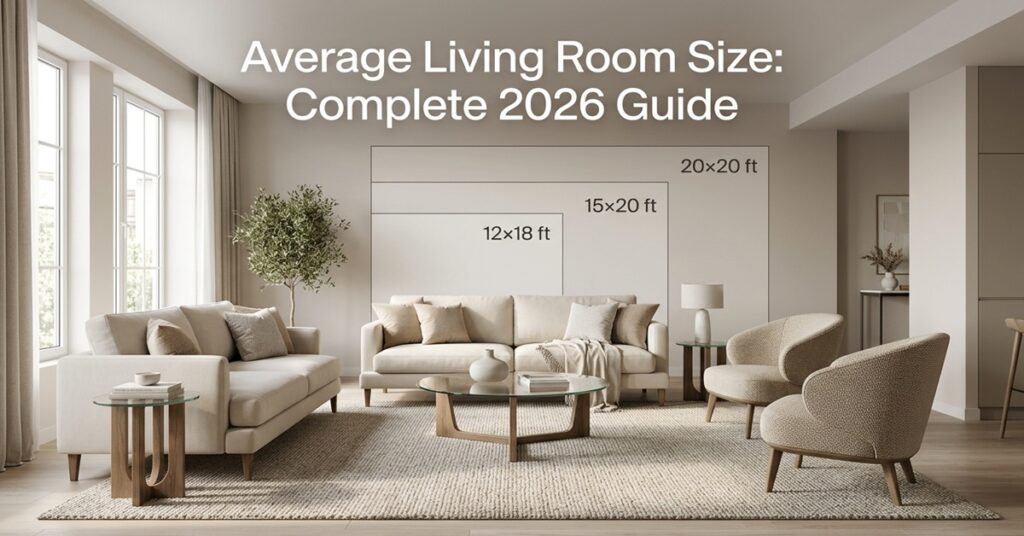
Across the United States, the average living room size ranges between 200 and 400 square feet. However, the most commonly cited standard is:
- 12×18 feet (216 sq ft)
This size is considered the “national average” because it fits most furniture layouts while maintaining comfortable circulation space.
According to industry data:
- Small homes & apartments: 150–250 sq ft
- Average homes: 200–400 sq ft
- Larger suburban homes: 300–500+ sq ft
Another design guide confirms similar figures, noting that most U.S. living rooms cluster around 12×18 feet (216 sq ft) as the baseline standard.
Why This Range Exists
Living room size depends heavily on:
- Total home square footage
- Urban vs suburban housing
- Architectural style (open-plan vs closed rooms)
- Lifestyle needs (entertaining vs minimal living)
For example, open-concept homes often feel larger even when the actual square footage is identical.
Standard Living Room Dimensions by Category
Understanding size categories helps you avoid one of the most common design mistakes: choosing furniture before knowing your spatial limits.
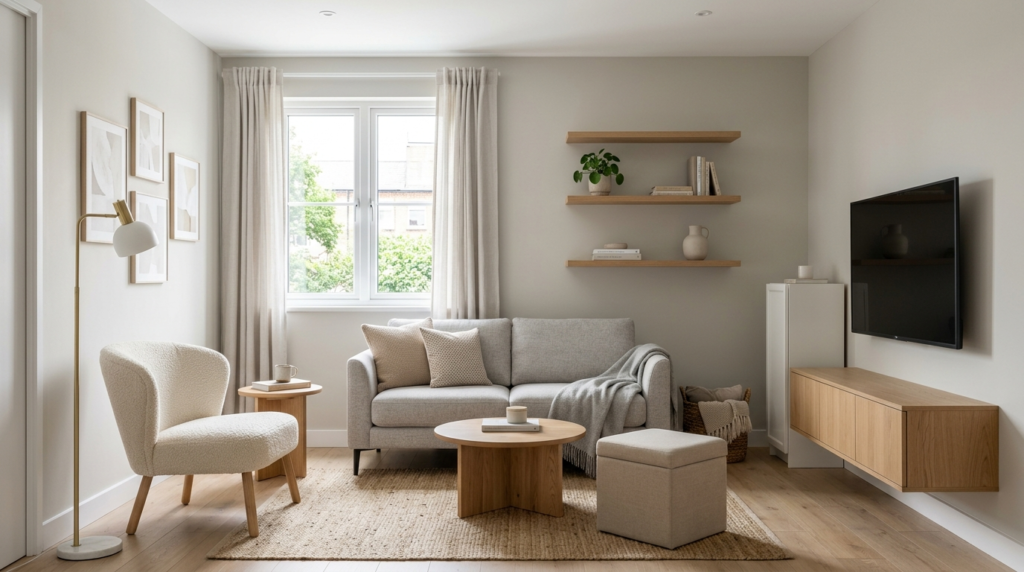
Small Living Rooms (120–180 sq ft)
Typical dimensions:
- 10×12 ft
- 12×15 ft
These are common in:
- Apartments
- Condos
- Starter homes
✔ Best for:
- 2–4 people
- Compact furniture layouts
- Minimalist or functional design styles
Small rooms require careful planning. Every inch matters, especially when balancing seating and walking space.
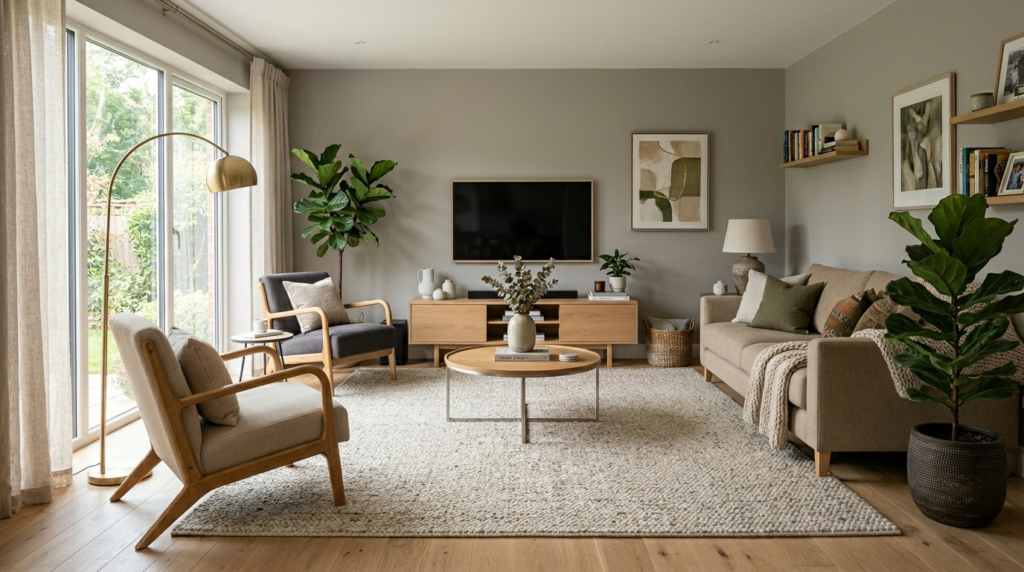
Medium Living Rooms (200–300 sq ft)
Typical dimensions:
- 12×18 ft
- 15×20 ft
This is the most common living room size in American homes.
✔ Why it’s popular:
- Fits 4–6 people comfortably
- Allows full sofa + chairs + coffee table
- Supports flexible layout designs
Medium rooms are considered the “sweet spot” because they balance comfort and functionality without feeling cramped or overly large.
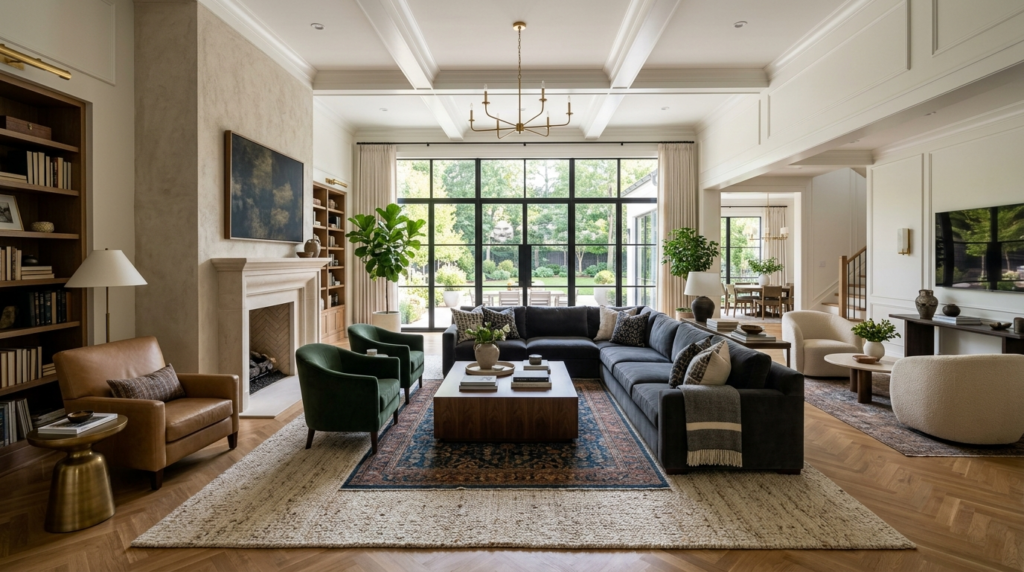
Large Living Rooms (300–500+ sq ft)
Typical dimensions:
- 15×20 ft
- 20×20 ft
- 20×25 ft or larger
✔ Ideal for:
- Large families
- Frequent entertaining
- Open-concept floor plans
Large living rooms allow:
- Multiple seating zones
- Entertainment + workspace combinations
- More decorative freedom
But they also come with a challenge: avoiding empty, disconnected space.
Living Room Size Comparison Table
| Category | Dimensions | Square Footage | Capacity |
|---|---|---|---|
| Small | 10×12 to 12×15 | 120–180 sq ft | 2–4 people |
| Medium | 12×18 to 15×20 | 200–300 sq ft | 4–6 people |
| Large | 15×20 to 20×25+ | 300–500+ sq ft | 6–10+ people |
Real-World Living Room Size Examples
Let’s break down common questions homeowners ask.
Is a 12×12 living room good?
Yes. A 12×12 room (144 sq ft) is small but functional. It typically fits:
- Sofa
- Coffee table
- TV stand
- 1–2 accent chairs
It works best for apartments or compact homes where efficiency matters more than openness.
Is a 15×15 living room considered large?
A 15×15 room (225 sq ft) sits at the upper end of medium size.
It offers:
- Flexible furniture arrangement
- Comfortable 4–6 person seating
- Balanced proportions
It’s not “large” in luxury-home terms, but it feels spacious in standard housing.
Is a 20×20 living room big?
Yes. A 20×20 room (400 sq ft) is significantly larger than the national average.
It allows:
- Multiple seating zones
- Large sectional sofas
- Entertainment + reading + workspace areas
It’s ideal for open-concept living.
Is a 300 sq ft living room spacious?
Yes. At 300 sq ft, your space is:
- Above average
- Highly flexible
- Suitable for multiple layouts
It comfortably supports modern lifestyle needs like hybrid working and entertainment zoning.
How Living Room Size Impacts Furniture Selection
Your room size directly determines what furniture works and what doesn’t.
Sofa Sizing Guide
A general rule:
- Small rooms → 72–78 inch sofa
- Medium rooms → 78–84 inch sofa
- Large rooms → sectional sofas or modular seating
Common mistake
Designers warn that choosing oversized furniture without measuring can:
- Block walkways
- Disrupt layout flow
- Make rooms feel cramped or unbalanced
A sofa is often the largest visual anchor in a living room its scale determines how the entire space feels.
Living Room Layout Planning: Turning Size Into Function
A well-sized room still fails without proper layout planning.
Popular Layout Types
- L-shape layout → best for medium rooms
- U-shape layout → ideal for conversation flow
- Floating layout → best for large rooms
Key spacing rules
- 30–36 inches for walking paths
- 18 inches between sofa and coffee table
- Clear focal point (TV or fireplace)
Proper spacing ensures the room feels open not cluttered or empty.
The 2/3 Rule in Living Room Design
One of the most useful design principles is the 2/3 rule:
Furniture should cover about two-thirds of the floor space.
Why it works:
- Prevents overcrowding
- Keeps visual balance
- Leaves enough breathing space
The remaining third is essential for movement and openness.
How to Make Small Living Rooms Feel Bigger
Even small spaces can feel spacious with the right techniques.
Smart design strategies:
- Light color palettes (white, beige, soft gray)
- Mirrors to reflect light
- Vertical storage solutions
- Multi-functional furniture
- Open-leg furniture designs
These techniques create visual expansion without changing actual square footage.
How to Avoid Empty Large Living Rooms
Large rooms often feel disconnected if not designed carefully.
Solutions:
- Divide into zones:
- seating area
- reading corner
- entertainment zone
- Use large rugs (8×10 or bigger)
- Add layered lighting
- Avoid pushing all furniture against walls
The goal is to create intimacy within space not emptiness.
🏡 Living Room Size by Home Type
| Home Type | Typical Size |
|---|---|
| Urban apartments | 150–250 sq ft |
| Standard homes | 200–400 sq ft |
| Suburban homes | 300–500 sq ft |
| Open-concept homes | 400+ sq ft |
Housing trends show suburban homes consistently offer larger living spaces due to expanded floor plans.
How to Measure Your Living Room Correctly
Accurate measurement is critical before buying furniture.
Steps:
- Measure length × width
- Multiply for square footage
- Account for doors and walkways
- Mark furniture outlines on floor
- Test circulation paths
Even small measurement errors can lead to poor furniture fit and layout imbalance.
Common Living Room Design Mistakes
Many homeowners unknowingly reduce usability by:
- Buying oversized furniture
- Ignoring walking space
- Skipping layout planning
- Using wrong rug size
- Overcrowding small rooms
Designers consistently emphasize that scale and proportion matter more than décor style.
Future Trends in Living Room Design (2026+)
Modern living spaces are evolving rapidly:
- Modular furniture systems
- Smart storage integration
- Flexible open-plan layouts
- Multi-use living spaces (work + leisure)
- Sustainable materials and design
Homes are becoming more adaptive, not fixed in function.
Frequently Asked Questions
What is the average living room size?
Between 200 and 400 square feet, with 12×18 ft being most common.
Is a 12×12 living room good?
Yes, but best suited for compact living and minimal furniture setups.
What size couch fits a 14×14 room?
Typically a sofa between 78–84 inches works best.
Is a 20×20 living room big?
Yes, it offers 400 sq ft well above average.
What is the ideal living room layout?
A U-shape or L-shape layout with proper walkways and a clear focal point.
Conclusion
The average living room size in the USA (200–400 sq ft) provides a useful benchmark, but it’s only the starting point.
What truly defines a great living room is not its square footage but how intelligently that space is used.
- Small rooms thrive on efficiency
- Medium rooms offer flexibility
- Large rooms require thoughtful zoning
With the right balance of layout, furniture scale, and design principles, any living room regardless of size can feel comfortable, stylish, and perfectly functional.