

Understanding how tall a 355ml can is may seem simple at first, but this standard beverage container is actually the result of decades of engineering, manufacturing optimization, and consumer psychology. The 355 ml (12 oz) aluminum can is the most widely used beverage format in the United States and many global markets.
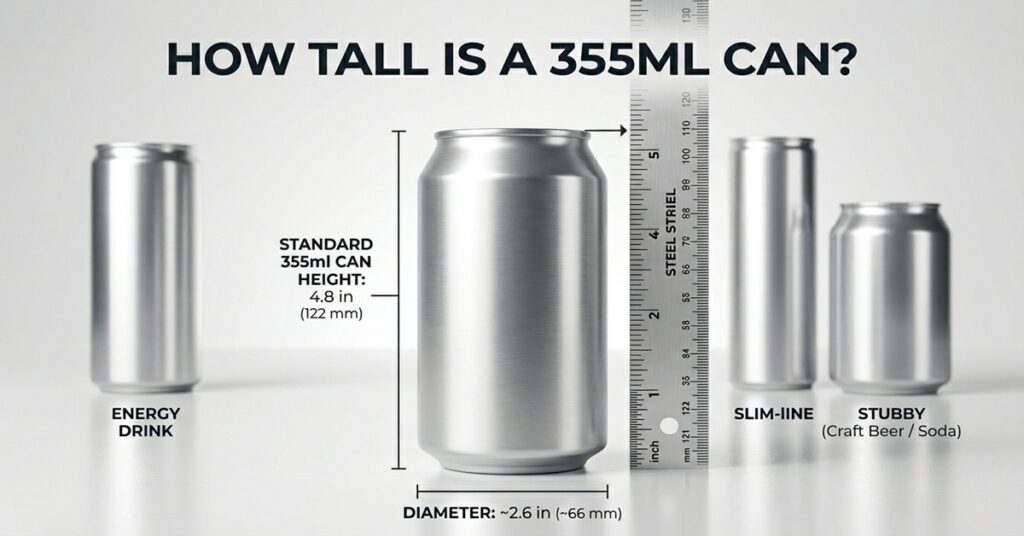
In precise terms, a standard 355 ml can is about 122 mm (4.8 inches) tall with a diameter of roughly 66 mm (2.6 inches). But the real story goes far deeper than just a number.
Let’s break down everything you need to know from exact dimensions and variations to why this size dominates the beverage industry.
1. What Is a 355ml Can?
A 355ml can equals 12 fluid ounces, which is the standard serving size for most canned beverages in North America.
It is used for:
- Soft drinks (cola, soda, flavored drinks)
- Beer and light alcoholic beverages
- Iced tea and sparkling beverages
- Ready-to-drink canned products
This size became the global benchmark because it strikes a balance between:
- Portion control
- Manufacturing efficiency
- Consumer convenience
Today, billions of 355 ml cans are produced every year worldwide.
2. How Tall Is a 355ml Can? (Exact Measurement)
The most important question: how tall is a 355ml can?
Standard Height
A standard 355 ml aluminum can measures:
- Height: 122 mm (4.8 inches)
- Diameter: 66 mm (2.6 inches)
- Volume: 355 ml (12 oz)
This measurement is consistent across most soda and beer cans in the U.S. market. :contentReference[oaicite:0]{index=0}
Another verified industrial specification confirms:
- Height range: 4.75 to 4.83 inches
- Average: ~4.8 inches (122 mm) :contentReference[oaicite:1]{index=1}
Key takeaway:
A 355ml can is slightly shorter than the length of a smartphone, making it highly portable and ergonomic.
3. Why the 355ml Can Height Is Standardized
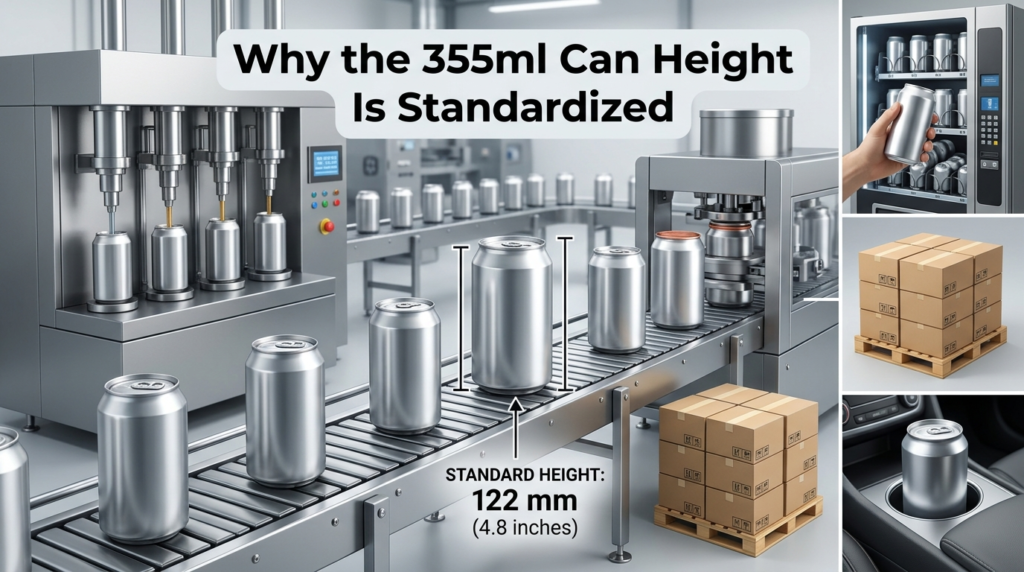
The height of 122 mm is not random. It is carefully engineered for:
1. Manufacturing Efficiency
Factories use high-speed filling machines calibrated to a fixed can height. Even a 1 mm variation can disrupt production lines.
2. Packaging Compatibility
Standardized height ensures:
- Perfect stacking in cartons
- Efficient pallet shipping
- Uniform shelf placement
3. Machine Compatibility
The 355 ml can fits:
- Vending machines
- Refrigerators
- Cup holders
4. Global Trade Consistency
Standardization reduces cost and complexity in international distribution.
4. 355ml Can Dimensions Breakdown (Technical View)
To fully understand how tall a 355 ml can is, we must break down its structure:
Height Components
- Body height
- Top lid (end)
- Bottom dome
Diameter Standard
Most cans follow the 211 diameter code, meaning:
- ~66 mm body diameter
Material Thickness
- Aluminum wall thickness: ~0.1 mm
- Lightweight but pressure-resistant
This combination allows the can to withstand carbonation pressure while remaining extremely light.
5. 355ml Can vs Other Aluminum Can Sizes
The height of a 355 ml can becomes more meaningful when compared to other formats.
Standard 355 ml Can
- Height: 122 mm
- Volume: 355 ml
- Balanced proportions
Sleek 355 ml Can
A sleek version contains the same liquid but looks taller:
- Height: ~155–156 mm
- Diameter: ~57 mm
- Same volume (355 ml)
Slim Can (Energy Drinks)
- Height: ~134 mm
- Smaller volume (~250 ml typically)
Stubby Can
- Height: ~92 mm
- Wider and shorter design
Key Insight:
Same liquid volume can appear very different depending on height-to-width ratio.
6. Why 355ml Became the Global Standard Size
The dominance of the 355 ml can is not accidental.
Historical Reasoning
- Became standard in North America during the aluminum transition era
- Replaced heavier steel containers
Industry Standardization
- 12 oz became the benchmark for soda and beer brands
Consumer Behavior
- Considered “perfect single serving size”
- Easy to finish in one sitting
Logistics Advantage
- Optimized for pallet stacking and transport efficiency
7. Engineering Behind the 355ml Can Height
A 355 ml can must balance three critical engineering constraints:
1. Pressure Resistance
Carbonated drinks generate internal pressure. The cylindrical shape distributes force evenly.
2. Lightweight Strength
Aluminum allows:
- Thin walls
- High durability
- Corrosion resistance
3. Structural Stability
The ratio of height to diameter prevents tipping and deformation.
Even the slight dome at the top and bottom improves pressure resistance significantly.
8. Real-World Visualization: How Tall Is 4.8 Inches?
To better understand the height of a 355 ml can:
- Slightly shorter than a smartphone (modern devices range 5–6.5 inches)
- About the height of a small remote control
- Similar to the width of a hand palm when placed vertically
This explains why consumers instinctively recognize it as a “perfect hand-fit size.”
9. Packaging Psychology: Why Height Matters
Interestingly, height influences perception more than volume.
Taller Cans (Same Volume)
- Feel more “premium”
- Often used in craft beverages
Shorter Cans
- Feel denser and more compact
- Associated with energy drinks or specialty shots
Marketing Effect
Even though both contain 355 ml:
- Taller cans can justify higher pricing
- Shelf visibility increases brand attention
10. Regional Differences in Can Sizes
While 355 ml dominates North America, other regions differ:
United States & Canada
- 355 ml standard can
Europe
- 330 ml is more common
Australia & Other Markets
- Mix of 330 ml and 375 ml formats
This means imported beverages may appear slightly different in height even if branding is identical.
11. Manufacturing & Logistics Importance
The height of a 355 ml can plays a major role in industrial efficiency.
Shipping Optimization
- Uniform height improves stacking density
- Reduces transportation costs
Production Lines
- High-speed filling requires exact height calibration
Retail Display
- Consistent dimensions ensure clean shelf alignment
A difference of even 2–3 mm could disrupt entire production systems.
12. Common Misconceptions About 355ml Can Height
Myth 1: Taller cans hold more liquid
Not true. Sleek cans can have identical volume.
Myth 2: All soda cans are identical worldwide
False Europe commonly uses 330 ml cans.
Myth 3: Height varies significantly between brands
Incorrect variation is typically less than 1 mm.
13. Quick Comparison Table
| Can Type | Height | Volume | Key Feature |
|---|---|---|---|
| Standard 355 ml | 122 mm | 355 ml | Most common global size |
| Sleek 355 ml | 156 mm | 355 ml | Taller, premium look |
| Slim can | 134 mm | 250 ml | Energy drinks |
| Stubby can | 92 mm | 250 ml | Compact design |
14. FAQs
How tall is a 355ml can in inches?
It is approximately 4.8 inches tall.
Is 355 ml equal to 12 oz?
Yes, 355 ml is the metric equivalent of 12 US fluid ounces.
Why do some 355 ml cans look taller?
Because of different design formats like sleek cans.
What is the diameter of a 355 ml can?
Around 66 mm (2.6 inches).
15. Conclusion
A 355 ml can is approximately 122 mm (4.8 inches) tall, making it one of the most standardized packaging formats in the global beverage industry.
But its importance goes beyond simple measurements. This size represents a carefully engineered balance between:
- Manufacturing precision
- Consumer convenience
- Packaging efficiency
- Marketing psychology
That’s why, despite decades of innovation, the 355 ml (12 oz) can remains the undisputed global standard for beverages.