
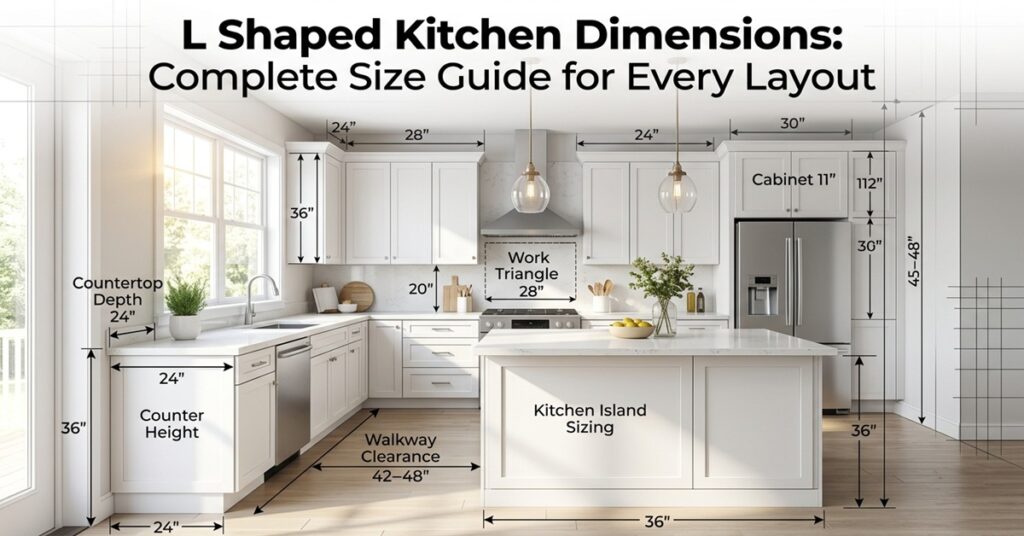

An L-shaped kitchen is one of the most practical and versatile kitchen layouts available today. Whether you’re remodeling a small apartment kitchen or designing a spacious open-concept home, understanding the right L-shaped kitchen dimensions is essential for creating a space that is comfortable, efficient, and visually appealing.
Unlike galley or U-shaped kitchens, an L-shaped design uses two adjoining walls to form a natural work zone. This arrangement maximizes corner space, improves traffic flow, and often leaves room for a kitchen island or dining area.
The challenge is getting the dimensions right. A kitchen that is too small can feel cramped, while an oversized layout can reduce efficiency by increasing the distance between key work zones.
This guide covers everything you need to know about L-shaped kitchen measurements, including standard dimensions, work triangle recommendations, island sizing, cabinet spacing, storage planning, and common design mistakes.
| L-Shaped Kitchen Feature | Standard Dimension / Recommendation |
|---|---|
| Minimum Kitchen Size | 8 ft × 8 ft |
| Most Common Kitchen Size | 10 ft × 10 ft to 12 ft × 12 ft |
| Large L-Shaped Kitchen | 15 ft × 15 ft or larger |
| Standard Counter Height | 36 inches |
| Bar Counter Height | 42 inches |
| Standard Counter Depth | 24 inches |
| Upper Cabinet Depth | 12 inches |
| Base Cabinet Depth | 24 inches |
| Minimum Walkway Clearance | 36 inches |
| Recommended Walkway Clearance | 42–48 inches |
| Work Aisle Width | 42 inches minimum |
| Work Triangle Distance | 13–26 feet total |
| Work Triangle Leg Length | 4–9 feet per side |
| Small Island Size | 4 ft × 2 ft |
| Medium Island Size | 6 ft × 3 ft |
| Large Island Size | 8 ft × 4 ft+ |
| Seating Space Per Person | 24 inches |
| Island Overhang | 12–15 inches |
| Space for 2 Stools | 4–5 ft island length |
| Space for 3 Stools | 6 ft island length |
| Space for 4 Stools | 8 ft island length |
| Distance Between Counter & Upper Cabinets | 18 inches |
| Recommended Pantry Height | 84–96 inches |
| Best Kitchen Size for an Island | 12 ft × 12 ft or larger |
| Ideal Layout Benefit | Efficient workflow, storage, and traffic flow |
| Most Popular L-Shaped Kitchen Size | 12 ft × 15 ft |
| Suitable for Open-Concept Homes | Yes |
| Suitable for Small Kitchens | Yes, with proper space planning |
What Is an L-Shaped Kitchen?
An L-shaped kitchen consists of cabinets, countertops, and appliances arranged along two adjoining walls that form a 90-degree angle.
This layout is popular because it naturally separates cooking and preparation zones while maintaining an open feel. It works well in both traditional homes and modern open-concept floor plans.
Advantages of an L-Shaped Kitchen
Some of the biggest benefits include:
- Efficient use of corner space
- Flexible appliance placement
- Better traffic flow than galley kitchens
- Easy integration with dining and living areas
- Space for kitchen islands in larger layouts
- Adaptability to both small and large homes
According to kitchen design professionals, L-shaped kitchens are among the most requested layouts because they balance functionality, storage, and aesthetics.
Standard L-Shaped Kitchen Dimensions
There is no single standard size for an L-shaped kitchen because dimensions depend on the available room size. However, most residential kitchens follow common planning guidelines.
Recommended Room Sizes
| Kitchen Type | Recommended Dimensions |
|---|---|
| Small | 8 ft × 8 ft |
| Standard | 10 ft × 10 ft |
| Medium | 12 ft × 12 ft |
| Large | 15 ft × 15 ft or larger |
These measurements provide enough space for cabinetry, countertops, appliances, and comfortable movement.
Minimum Leg Length Requirements
The two walls that form the “L” are known as legs.
Recommended dimensions include:
- Short leg: 6–8 feet minimum
- Long leg: 8–12 feet minimum
- Ideal layout: 10–15 feet per leg
Smaller dimensions can work but may limit appliance placement and storage capacity.
Standard Countertop Depth
Most kitchens use a countertop depth of:
- 24 inches (standard)
- 25–27 inches (deep counters)
- 30 inches (specialized workspaces)
Maintaining a consistent depth creates a cleaner appearance and improves usability.
L-Shaped Kitchen Dimensions by Kitchen Size
The ideal layout changes significantly depending on the room’s overall dimensions.
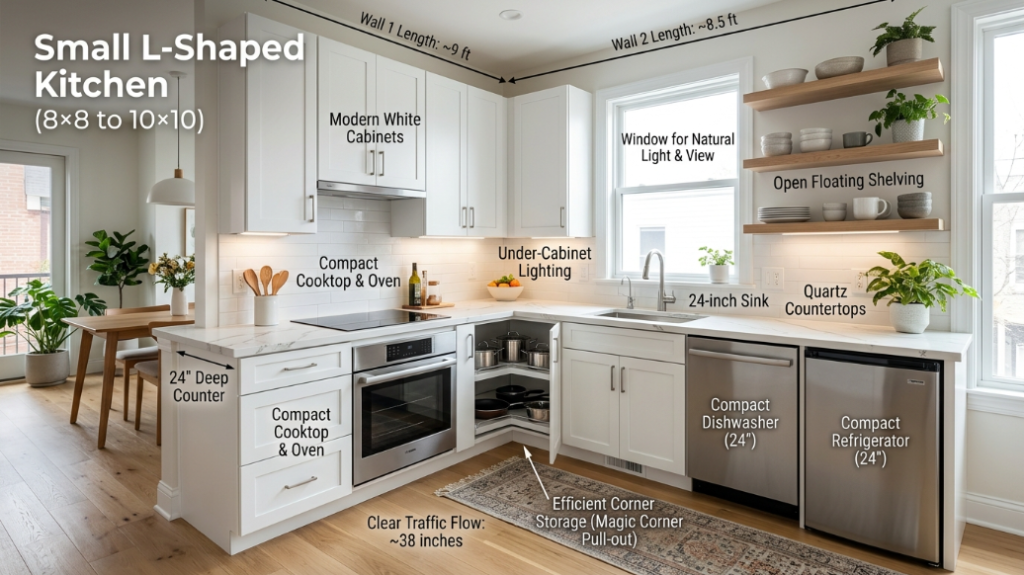
Small L-Shaped Kitchens (8×8 to 10×10)
Small kitchens require efficient space planning.
Recommended features include:
- Compact refrigerator
- Single sink
- Narrow dishwasher
- Limited upper cabinets
- Open shelving for visual space
Typical dimensions:
| Element | Measurement |
|---|---|
| Counter Depth | 24 inches |
| Walkway Width | 36 inches |
| Cabinet Height | 34.5 inches |
| Counter Height | 36 inches |
A small L-shaped kitchen can still provide excellent functionality when storage is carefully planned.
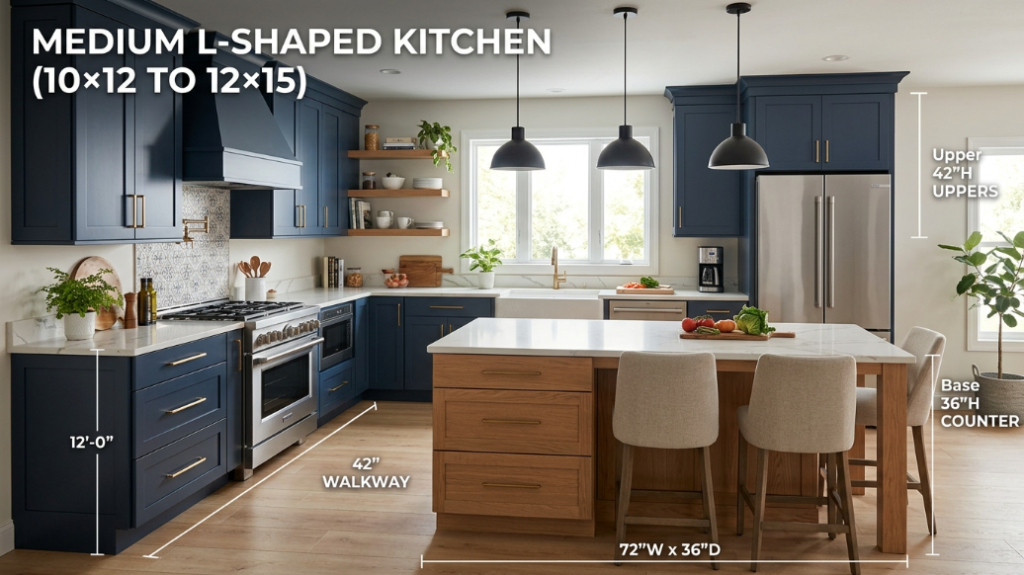
Medium L-Shaped Kitchens (10×12 to 12×15)
This is the most common kitchen size in modern homes.
Benefits include:
- More prep space
- Larger appliance options
- Additional storage
- Potential breakfast seating
A medium layout typically supports the ideal kitchen work triangle and offers a balance between efficiency and comfort.
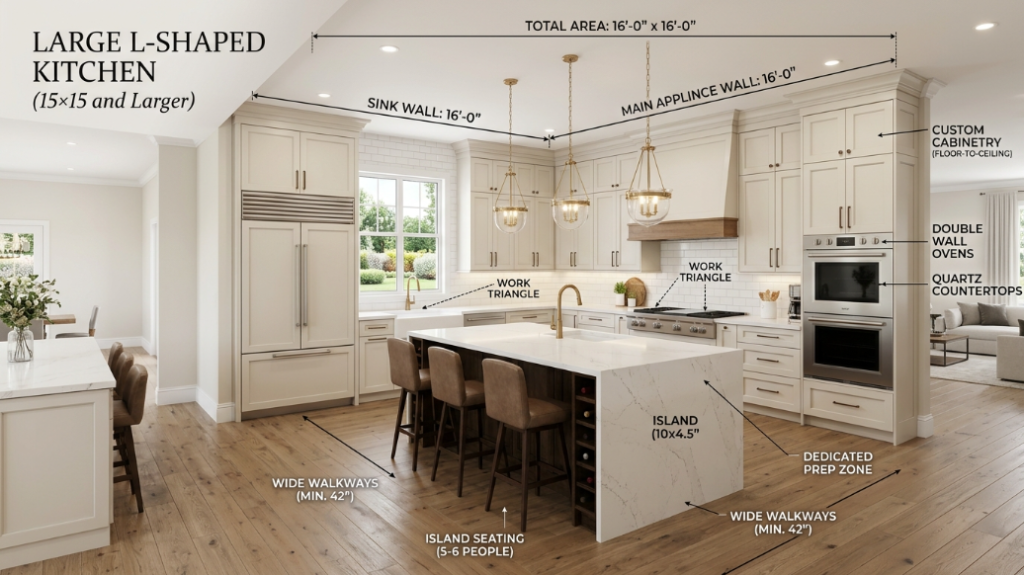
Large L-Shaped Kitchens (15×15 and Larger)
Large kitchens offer significantly more design flexibility.
Features often include:
- Large islands
- Double ovens
- Walk-in pantries
- Beverage stations
- Additional prep sinks
These layouts are especially popular in luxury homes and open-concept floor plans.
L-Shaped Kitchen Work Triangle Dimensions
One of the most important kitchen design principles is the work triangle.
The work triangle connects:
- Refrigerator
- Sink
- Cooktop
The goal is to reduce unnecessary movement while cooking.
Recommended Triangle Measurements
Industry guidelines suggest:
- Each side: 4–9 feet
- Total triangle perimeter: 13–26 feet
These dimensions help maintain efficiency without crowding.
Why the Work Triangle Matters
A poorly designed kitchen forces users to take unnecessary steps.
An efficient triangle:
- Speeds meal preparation
- Reduces fatigue
- Improves safety
- Creates smoother workflow
Common Work Triangle Mistakes
Avoid:
- Appliances placed too close together
- Excessively large kitchens without zoning
- Islands that interrupt traffic flow
- Refrigerator doors blocking pathways
The best L-shaped kitchens prioritize movement and accessibility.
L-Shaped Kitchen Counter Space Requirements
Counter space often determines how functional a kitchen feels.
Recommended Counter Length
Designers recommend:
- 36 inches of prep space near the sink
- 24 inches beside the refrigerator
- 12–18 inches beside the cooktop
This creates dedicated work zones for food preparation.
Corner Counter Optimization
Corners are often underutilized.
Solutions include:
- Lazy Susan systems
- Pull-out shelving
- Blind-corner organizers
- Corner drawers
Modern corner storage systems can increase usable storage by up to 30% compared to traditional shelving.
L-Shaped Kitchen Island Dimensions
Many homeowners want an island in their L-shaped kitchen.
The key question is whether the room can accommodate one comfortably.
Minimum Room Size for an Island
Most experts recommend at least:
- 12 feet × 12 feet room size
- 42 inches clearance around all sides
Anything smaller may feel cramped.
Recommended Island Sizes
| Kitchen Size | Island Dimensions |
|---|---|
| Small | 4 ft × 2 ft |
| Medium | 6 ft × 3 ft |
| Large | 8 ft × 4 ft+ |
Island Seating Dimensions
Allow:
- 24 inches per person
- 12–15 inch overhang
- 42 inches behind seating
Example:
| Seats | Recommended Length |
|---|---|
| 2 | 48 inches |
| 3 | 72 inches |
| 4 | 96 inches |
These measurements provide comfortable seating without crowding.
L-Shaped Kitchen Cabinet Dimensions
Cabinet dimensions affect both storage and workflow.
Base Cabinet Dimensions
Standard measurements include:
| Component | Dimension |
|---|---|
| Height | 34.5 inches |
| Depth | 24 inches |
| Counter Height | 36 inches |
Upper Cabinet Dimensions
Typical dimensions:
| Component | Dimension |
|---|---|
| Height | 30–42 inches |
| Depth | 12 inches |
The space between counters and upper cabinets is usually 18 inches.
Pantry Cabinet Dimensions
Tall pantry cabinets commonly measure:
- 84 inches high
- 90 inches high
- 96 inches high
These units significantly increase storage capacity without expanding the kitchen footprint.
L-Shaped Kitchen Walkway and Clearance Dimensions
Clearances are among the most important dimensions in any kitchen.
Recommended Walkway Widths
| Area | Minimum | Recommended |
|---|---|---|
| Walkway | 36 inches | 42–48 inches |
| Work Aisle | 42 inches | 48 inches |
| Multiple Cooks | 48 inches | 60 inches |
Appliance Clearance Requirements
Always allow enough space for:
- Refrigerator doors
- Dishwasher doors
- Oven doors
- Trash pull-outs
Failure to account for door swing is one of the most common kitchen design mistakes.
L-Shaped Kitchen With Dining Areas
Many homeowners combine kitchens and dining spaces.
Breakfast Bar Dimensions
Recommended measurements:
- Height: 42 inches
- Overhang: 12–15 inches
- Seating width: 24 inches per person
Dining Table Clearance
Leave:
- 36 inches minimum around tables
- 48 inches preferred in high-traffic areas
This ensures chairs can move comfortably.
Popular L-Shaped Kitchen Layout Variations
L-Shaped Kitchen With Island
Ideal for medium and large kitchens.
Benefits include:
- Additional prep space
- More storage
- Casual dining area
- Better entertaining
L-Shaped Kitchen With Peninsula
A peninsula functions similarly to an island while requiring less space.
Advantages:
- Improved storage
- Lower cost
- Better fit in smaller kitchens
Open-Concept L-Shaped Kitchen
This design blends cooking, dining, and living spaces.
Key benefits:
- Improved natural light
- Better social interaction
- Greater flexibility
It remains one of the most requested kitchen layouts in modern homes.
Ergonomic Design Guidelines for L-Shaped Kitchens
Good kitchen design is about more than measurements.
It should also support comfort and usability.
Ideal Reach Zones
Frequently used items should be stored:
- Between shoulder and waist height
- Near work areas
- Within easy reach
Universal Design Recommendations
Consider:
- Wider walkways
- Lower countertops
- Pull-out shelves
- Easy-grip hardware
These features improve accessibility for users of all ages.
“Universal design creates kitchens that are safer, more comfortable, and easier to use throughout every stage of life.”
Common L-Shaped Kitchen Dimension Mistakes
Even expensive renovations can fail if dimensions are ignored.
Oversized Islands
Large islands often reduce workflow efficiency and restrict movement.
Insufficient Walkway Space
Less than 36 inches of clearance can make the kitchen feel cramped.
Ignoring Corner Storage
Unplanned corners frequently become wasted space.
Poor Appliance Placement
Appliances should support workflow rather than create obstacles.
Lack of Prep Space
Countertops near sinks and cooktops should remain clear for food preparation.
L-Shaped Kitchen Dimensions Cheat Sheet
| Feature | Recommended Dimension |
|---|---|
| Counter Height | 36 inches |
| Counter Depth | 24 inches |
| Walkway Width | 42–48 inches |
| Work Aisle | 42 inches minimum |
| Island Overhang | 12–15 inches |
| Seating Space | 24 inches per person |
| Work Triangle Legs | 4–9 feet |
| Work Triangle Total | 13–26 feet |
| Upper Cabinet Depth | 12 inches |
| Base Cabinet Depth | 24 inches |
Frequently Asked Questions
What size is an L shaped kitchen?
A typical L-shaped kitchen ranges from 10×10 to 15×15 feet, depending on storage needs, appliances, and seating requirements.
Is a 15×15 kitchen big?
Yes, a 15×15 kitchen is considered spacious and can easily accommodate a large island, dining area, and ample storage.
Is a 12×12 kitchen small?
No, a 12×12 kitchen is a medium-sized layout that offers enough space for efficient workflow and even a small island.
What does a 10×10 kitchen mean?
A 10×10 kitchen refers to a kitchen space measuring 10 feet by 10 feet, totaling 100 square feet.
What is the best layout for an L-shaped kitchen?
The best L-shaped kitchen layout places the sink, refrigerator, and cooktop in an efficient work triangle with clear walkways.
What is the 3×4 kitchen rule?
The 3×4 kitchen rule refers to organizing cooking, cleaning, and storage zones with adequate workspace to improve efficiency and workflow.
Conclusion
L-shaped kitchen dimensions play a major role in determining how functional, comfortable, and attractive your kitchen will be. While a standard 10×10 or 12×12 layout works well for many homes, the ideal dimensions depend on your available space, cooking habits, storage requirements, and lifestyle.
Successful kitchen design balances countertop space, cabinet storage, appliance placement, and traffic flow. By following recommended measurements for walkways, work triangles, islands, and seating areas, you can create a kitchen that feels spacious, efficient, and enjoyable to use every day.
Whether you’re designing a compact apartment kitchen or a large open-concept gathering space, proper planning ensures your L-shaped kitchen delivers both style and functionality for years to come.