
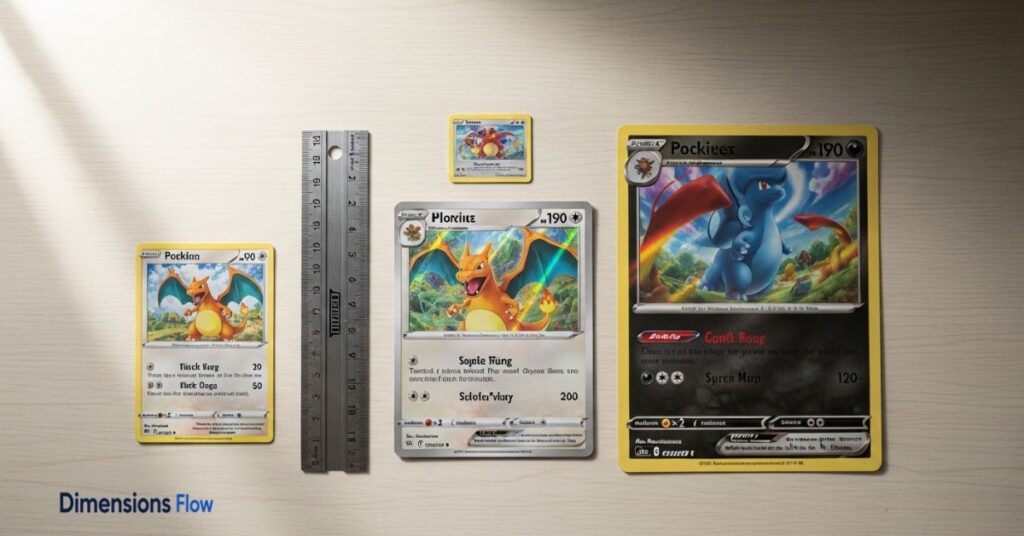

If you collect, trade, or play the Pokémon Trading Card Game (TCG), understanding Pokemon card dimensions isn’t just a minor detail it’s essential. From choosing the right sleeves to identifying counterfeit cards, size and thickness play a crucial role in both gameplay and long-term preservation.
In this complete 2026 guide, we’ll go beyond the basics. You’ll learn exact measurements, explore all card size variants, understand regional differences, and discover practical tips that many collectors overlook.
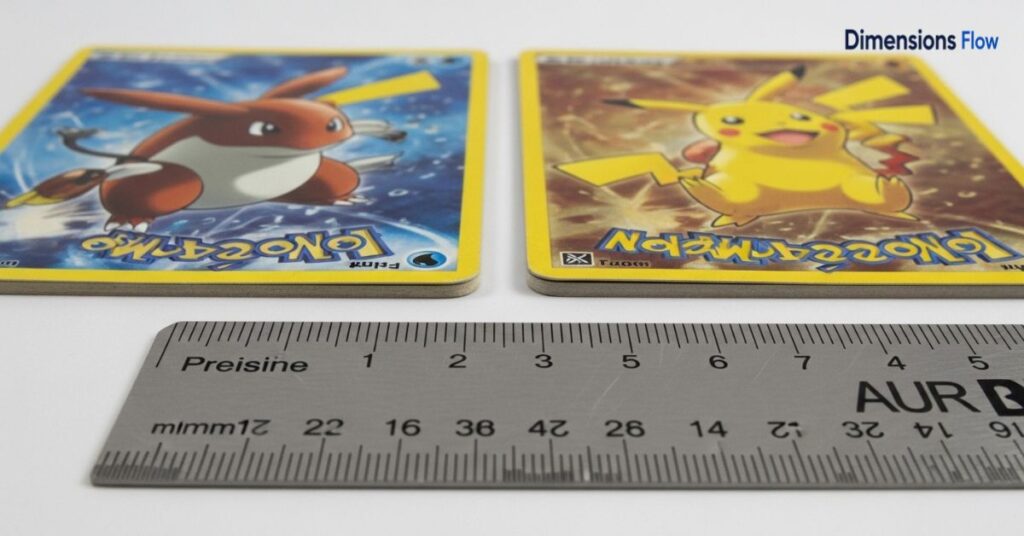
What Are the Official Pokemon Card Dimensions?
Standard Pokemon Card Size (Most Common Format)
The standard Pokémon card dimensions are:
- 2.5 inches × 3.5 inches
- 63 mm × 88 mm
- 6.3 cm × 8.8 cm
This size has remained consistent since the Pokémon TCG launched in 1996. It’s also identical to standard playing cards used in many traditional decks.
Why this matters:
- Ensures uniform gameplay
- Allows universal compatibility with accessories
- Maintains fairness in tournaments
“Consistency in card dimensions is critical for competitive integrity and manufacturing efficiency across trading card games.”
Why Exact Dimensions Matter
You might wonder does a millimeter really matter? Absolutely.
Here’s why precision is important:
- Tournament legality: Cards must meet official size standards
- Shuffling consistency: Uniform cards prevent marking or bias
- Sleeve compatibility: Even slight size differences affect fit
- Collector value: Authentic cards must match exact specs
Even a small variation can indicate a counterfeit card or manufacturing defect.
Pokemon Card Dimensions Breakdown (Height, Width, Thickness)
Card Height vs Width Explained
Understanding orientation helps when measuring:
- Height (long edge): 3.5 inches (88 mm)
- Width (short edge): 2.5 inches (63 mm)
Cards are designed vertically (portrait orientation), which influences artwork layout and gameplay readability.
Pokemon Card Thickness & Material Quality
Pokémon cards aren’t just about length and width thickness also matters.
- Thickness range: 0.01–0.03 inches
- Metric equivalent: 0.25–0.76 mm
Key Insights:
- Vintage cards (1990s): Slightly thinner and more flexible
- Modern cards: Slightly thicker with improved durability
- Premium cards: May feel sturdier due to layered printing
Thickness directly affects:
- Shuffle feel
- Card durability
- Resistance to bending
Measurement Accuracy & Tolerance
Authentic Pokémon cards follow strict production standards:
- Tolerance: ±0.5 mm
- Consistency: Maintained across global printing facilities
If a card is off by 1–2 mm, it’s likely fake.
Complete Pokemon Card Size Chart (All Variants)
Here’s a full breakdown of all Pokémon card sizes:
| Card Type | Inches | Millimeters | Usage | Protection Type |
|---|---|---|---|---|
| Standard | 2.5″ × 3.5″ | 63 × 88 mm | Gameplay, tournaments | Standard sleeves |
| Box Topper | ~3.5″ × 5″ | 90 × 126 mm | Promotional display | Oversized sleeves |
| Jumbo L (2020+) | 5.2″ × 7.3″ | 133 × 185 mm | Premium collections | Jumbo sleeves |
| Jumbo XL | 5.7″ × 7.9″ | 145 × 200 mm | Older promotional cards | XL sleeves |
| CoroCoro XXL | 5.7″ × 8.1″ | 145 × 205 mm | Japanese exclusives | Custom protection |
Oversized & Promotional Pokemon Cards Explained
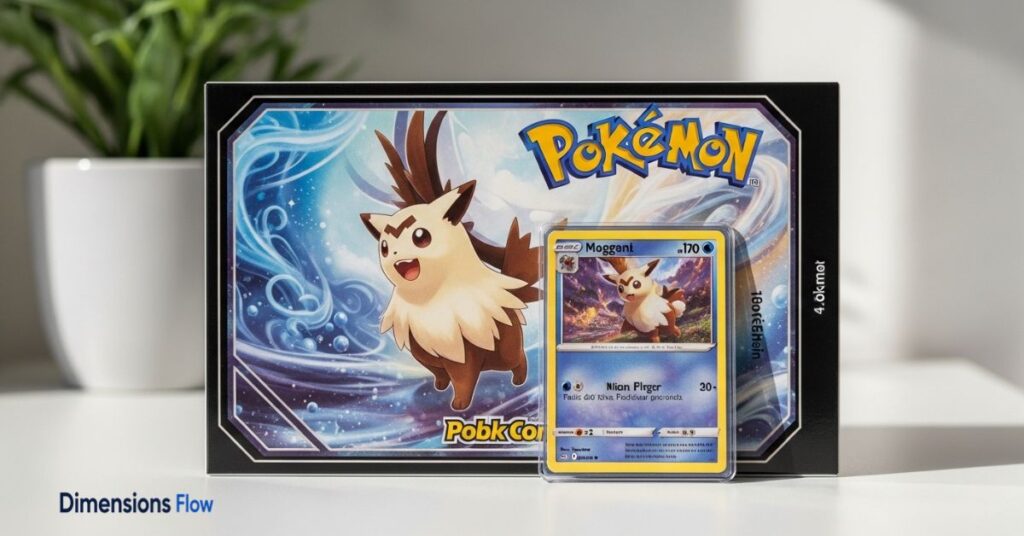
What Are Box Topper Cards?
Box Topper cards are promotional items included in special sets.
Key features:
- Larger than standard cards
- Not legal for tournament play
- Designed for display
They offer visual appeal but require special storage solutions.
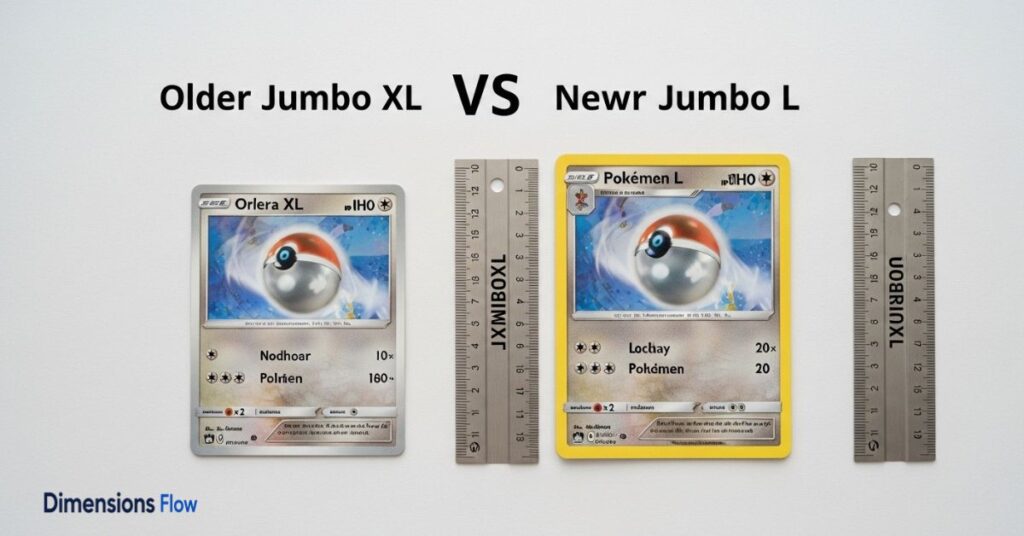
Jumbo Cards Evolution (XL vs L)
Pokémon jumbo cards have evolved over time:
- Pre-2019 (Jumbo XL): Larger format
- Post-2020 (Jumbo L): Slightly smaller for easier storage
Why the change?
- Better compatibility with binders
- Reduced storage issues for collectors
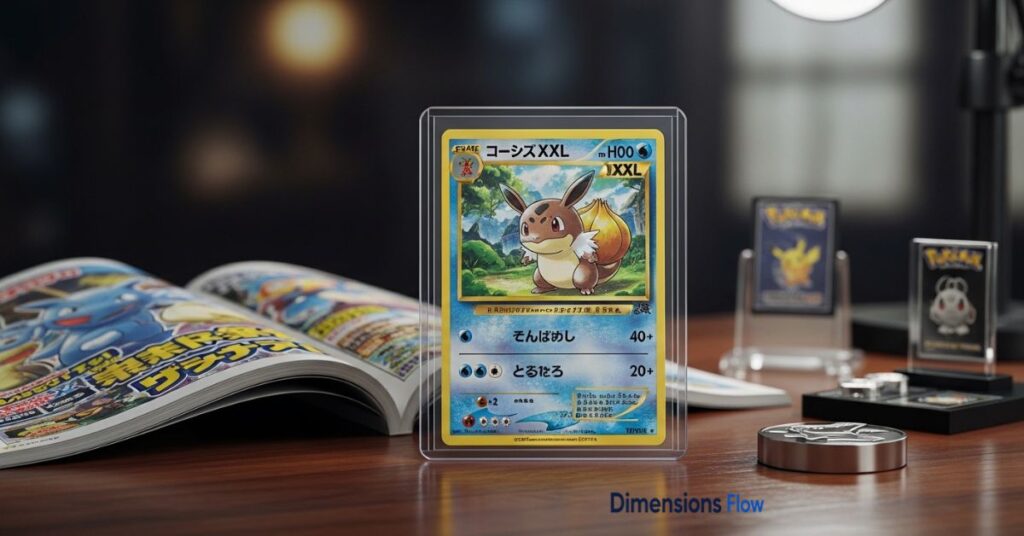
CoroCoro XXL Cards (Rare Japanese Releases)
These are among the rarest Pokémon cards:
- Distributed via CoroCoro Comic magazine
- Exclusive to Japan
- Larger than most jumbo formats
Collectors value them due to:
- Limited availability
- Unique artwork
- Cultural significance
Japanese vs International Pokemon Card Dimensions
Key Size Differences
| Region | Dimensions |
|---|---|
| International | 63 × 88 mm |
| Japanese | ~59.9 × 86.1 mm |
Why This Difference Exists
The variation comes from:
- Different printing standards
- Manufacturing origins in Japan
Sleeve Compatibility Issues (Critical Insight)
This is where many beginners make mistakes:
- Japanese sleeves = too small for international cards
- Standard sleeves = loose for Japanese cards
Pro Tip: Always match sleeve type to card origin.
Pokemon Card Sizes Compared to Other TCGs
Standard TCG Card Size Comparison
Most trading card games follow the same format:
- Pokémon: 2.5″ × 3.5″
- Magic: The Gathering: 2.5″ × 3.5″
- Yu-Gi-Oh!: Slightly smaller
Why Standardization Exists
- Reduces manufacturing costs
- Ensures accessory compatibility
- Simplifies global distribution
What Size Sleeves Fit Pokemon Cards? (Practical Buyer Guide)
Standard Sleeve Sizes
- Outer sleeves: 2.625″ × 3.625″
- Provides extra space for easy insertion
Perfect Fit Inner Sleeves
- Designed for snug protection
- Used in double-sleeving
Benefits:
- Extra protection against dust and moisture
- Prevents edge wear
Sleeves for Jumbo & Oversized Cards
- Require custom or oversized sleeves
- Often used with display cases
Common Mistakes to Avoid
- Buying wrong sleeve size
- Ignoring card origin (Japanese vs international)
- Using low-quality sleeves
Storage & Protection Tips Based on Card Dimensions
Best Storage Options
- Binders: Ideal for collections
- Deck boxes: Great for active players
- Top loaders: Maximum protection for rare cards
Long-Term Preservation Tips
To maintain card condition:
- Store in cool, dry environments
- Avoid direct sunlight
- Use acid-free materials
Display Options for Oversized Cards
- Wall frames
- Display stands
- Protective acrylic cases
How to Identify Fake Pokemon Cards Dimensions
Incorrect Size as a Red Flag
Fake cards often:
- Differ by 1–2 mm
- Have uneven edges
Thickness & Material Differences
- Authentic cards feel firm
- Fake cards feel flimsy or overly glossy
Other Warning Signs
- Poor print quality
- Incorrect fonts
- Color inconsistencies
Pokemon Card Dimensions in Different Units
Inches
- 2.5″ × 3.5″
Millimeters
- 63 × 88 mm
Centimeters
- 6.3 × 8.8 cm
Quick Conversion Table
| Unit | Measurement |
|---|---|
| Inches | 2.5 × 3.5 |
| mm | 63 × 88 |
| cm | 6.3 × 8.8 |
Real-World Examples of Pokemon Card Dimensions
Standard Cards in Booster Packs
These make up the majority of Pokémon cards:
- Used in gameplay
- Found in all standard packs
Promotional Cards in Collection Boxes
- Larger formats
- Designed for collectors
Rare High-Value Cards
Some cards are extremely valuable:
- Pikachu Illustrator (sold for over $5 million)
- First Edition Shadowless Charizard
Despite their value, they still follow standard dimensions.
FAQs
What size are Pokémon cards?
Standard Pokémon cards measure 2.5″ × 3.5″ (63mm × 88mm).
What size is a jumbo Pokémon card?
Jumbo cards range from 5.2″ × 7.3″ to 5.7″ × 8.1″, depending on the version.
What size sleeves fit Pokémon cards?
Standard sleeves: 2.625″ × 3.625″.
Are Pokémon cards all the same size?
No. Standard cards are uniform, but promotional cards vary in size.
How thick are Pokémon cards?
Between 0.25 mm and 0.76 mm.
Are fake Pokémon cards different sizes?
Yes. Many counterfeit cards are slightly larger or smaller.
Key Takeaways
- Standard Pokémon card dimensions are 2.5″ × 3.5″ (63mm × 88mm)
- Thickness ranges from 0.25 mm to 0.76 mm
- Multiple oversized variants exist for promotional use
- Japanese cards are slightly smaller than international ones
- Proper sleeves and storage are essential for protection
- Size inconsistencies can help identify fake cards
Final Thoughts
Understanding pokemon card dimensions goes far beyond memorizing numbers. It connects directly to gameplay performance, collection value, and long-term preservation.
Whether you’re a casual collector or a competitive player, mastering these details gives you an edge helping you protect your cards, avoid costly mistakes, and fully enjoy the world of Pokémon TCG.
If you’re serious about building a high-quality collection, start with the basics and dimensions are the foundation of it all.