
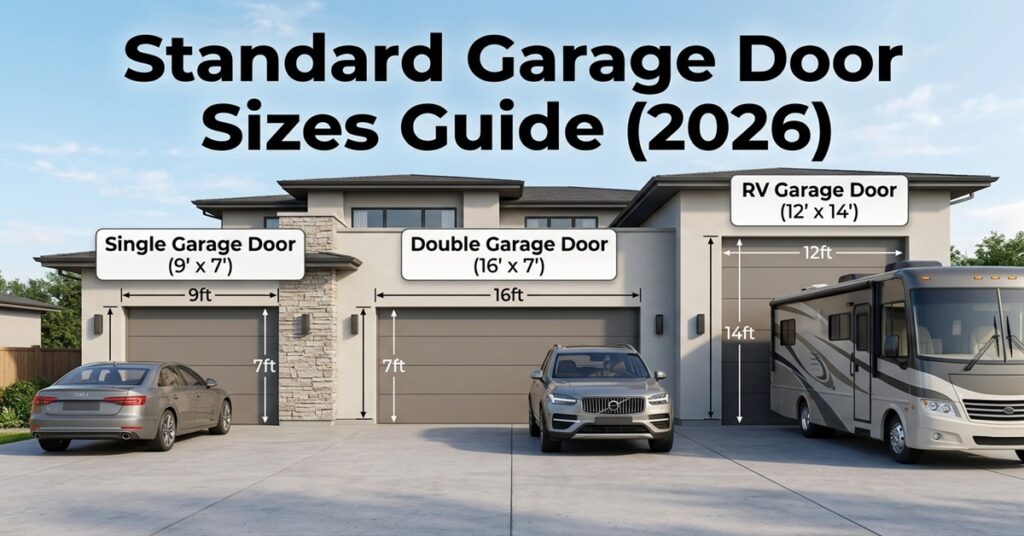

Choosing the right garage door size is one of the most important decisions when building a new garage, replacing an old door, or upgrading your home’s storage and parking space. A garage door that is too small can make parking difficult, increase the risk of vehicle damage, and limit future flexibility. On the other hand, selecting the right dimensions improves convenience, safety, curb appeal, and even property value.
Whether you own a compact car, a full-size pickup truck, an SUV, or an RV, understanding standard garage door sizes helps you make an informed decision. This guide covers everything from common residential dimensions to custom options, pricing considerations, and expert recommendations based on vehicle type.
Garage Door Sizes at a Glance
The table below summarizes the most common residential garage door dimensions.
| Garage Door Type | Common Widths | Common Heights |
|---|---|---|
| Single Garage Door | 8 ft, 9 ft, 10 ft | 7 ft, 8 ft |
| Double Garage Door | 12 ft, 14 ft, 16 ft, 18 ft, 20 ft | 7 ft, 8 ft |
| Triple Garage Configuration | Varies | 7 ft, 8 ft |
| RV Garage Door | 10 ft–14 ft | 12 ft–16 ft |
| Custom Garage Door | Custom | Custom |
Among residential properties, the most common garage door sizes are:
- 9′ x 7′ for a single-car garage
- 16′ x 7′ for a double-car garage
- 16′ x 8′ for larger vehicles and modern homes
Many newly built homes now feature 8-foot-tall garage doors because modern vehicles continue to grow in size.
Standard Single Garage Door Sizes
Single garage doors are designed to accommodate one vehicle and are commonly found in smaller homes, detached garages, and workshops.
Common Single-Car Garage Door Dimensions
Standard single garage door sizes include:
| Size | Best For |
|---|---|
| 8′ x 7′ | Compact cars |
| 8′ x 8′ | Compact SUVs |
| 9′ x 7′ | Sedans and small SUVs |
| 9′ x 8′ | SUVs and crossovers |
| 10′ x 8′ | Larger trucks and SUVs |
The 9′ x 7′ size remains one of the most popular choices because it offers a good balance between accessibility and construction costs.
What Vehicles Fit in a Single Garage Door?
A standard single garage door works well for:
- Sedans
- Hatchbacks
- Compact SUVs
- Crossovers
- Small pickup trucks
Modern vehicles are wider than many people realize. For example, several popular SUVs exceed 78 inches in width without mirrors. When mirrors are included, parking space becomes even more important.
Pros and Cons of Single Garage Doors
Advantages
- Lower purchase cost
- Less maintenance
- Better energy efficiency when opening
- Simpler installation
Disadvantages
- Limited flexibility
- Difficult parking for larger vehicles
- Less room for future upgrades
Standard Double Garage Door Sizes
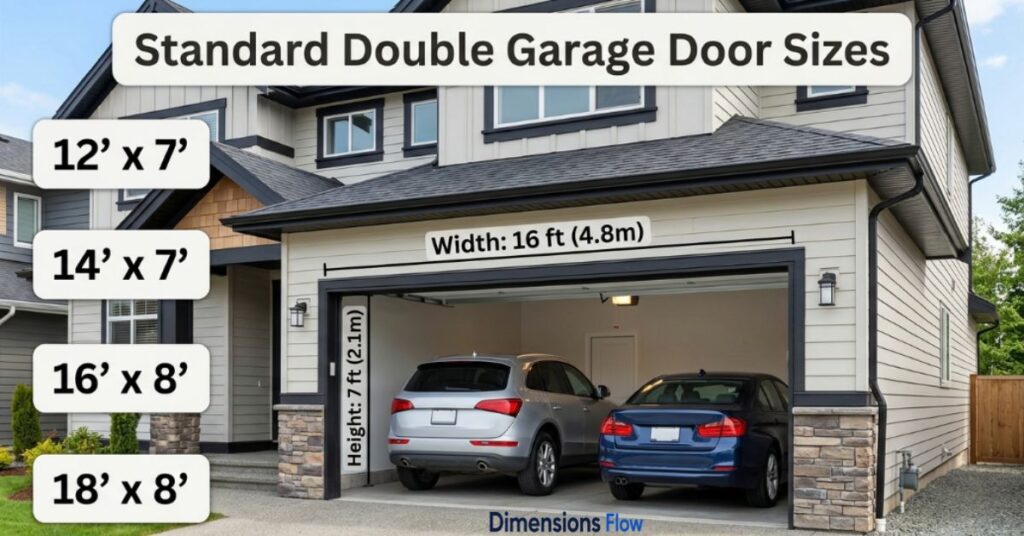
Double garage doors are designed for two vehicles and are the most common option in suburban homes.
Common Double Garage Door Dimensions
Typical double garage door sizes include:
| Size | Typical Use |
|---|---|
| 12′ x 7′ | Compact two-car garages |
| 14′ x 7′ | Smaller double garages |
| 16′ x 7′ | Standard two-car garage |
| 16′ x 8′ | Larger vehicles |
| 18′ x 8′ | Luxury homes |
| 20′ x 8′ | Extra-wide garages |
Why 16′ x 7′ Is the Most Popular Double Garage Door Size
The 16-foot-wide garage door offers enough space for:
- Two average-sized vehicles
- Comfortable entry and exit
- Mirror clearance
- Additional maneuvering room
Builders often prefer this size because it balances practicality and affordability.
Vehicle Capacity and Clearance Considerations
When planning a double garage door, consider:
- Vehicle width including mirrors
- Driver and passenger door opening space
- Storage shelves
- Workbenches
- Bicycle storage
A garage may technically fit two vehicles, but comfortable daily use often requires additional clearance.
One Large Door vs Two Separate Doors
Many homeowners debate whether to install one double garage door or two single doors.
One Large Door
Benefits:
- Lower installation cost
- Modern appearance
- Easier access
Drawbacks:
- More heat loss when opened
- Larger replacement cost
Two Single Doors
Benefits:
- Better insulation performance
- Individual operation
- Traditional appearance
Drawbacks:
- Higher installation cost
- More hardware to maintain
Triple Garage Door Sizes and Layout Options
Triple garages are increasingly popular among families with multiple vehicles, recreational equipment, or workshop needs.
Common Triple Garage Configurations
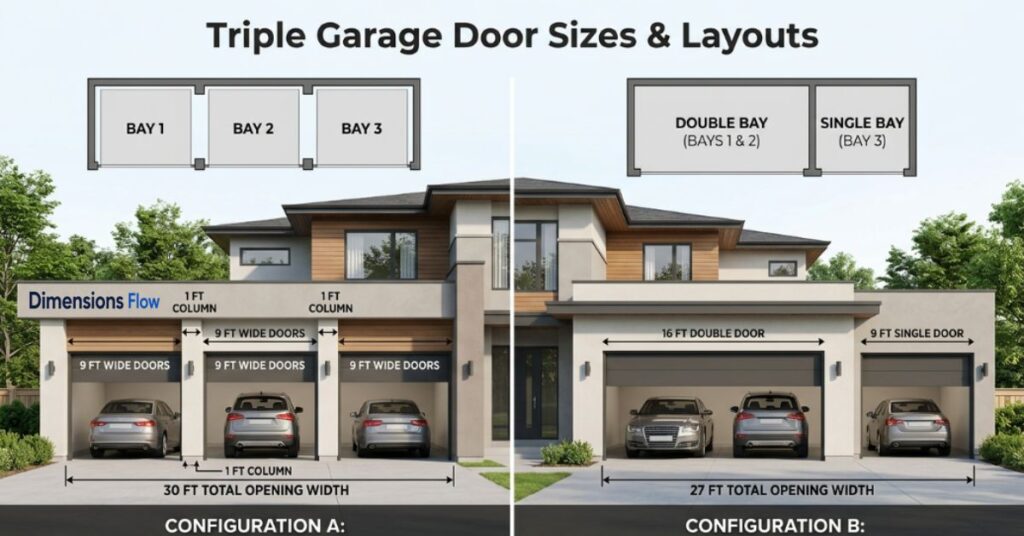
Most triple garages use one of these layouts:
Three Single Garage Doors
This design places three separate doors across the front of the garage.
Benefits include:
- Independent operation
- Enhanced architectural appeal
- Better energy efficiency
One Single Door and One Double Door
A common configuration includes:
- One 9-foot single door
- One 16-foot double door
This setup provides flexibility while minimizing construction costs.
Is There a Standard Triple Garage Door Size?
Unlike single and double garage doors, there is no universal standard for one large triple-width door.
Most builders prefer multiple-door configurations because extremely wide doors:
- Require stronger hardware
- Cost more
- Place greater stress on tracks and springs
Custom Triple Garage Door Solutions
Custom garage door manufacturers can create oversized triple-width doors for modern homes, luxury garages, and specialty vehicle storage.
Recommended Garage Door Sizes by Vehicle Type
Not all vehicles require the same garage door dimensions.
Best Garage Door Size for Sedans and Compact Cars
Recommended size:
- 9′ x 7′
This size provides sufficient width and comfortable clearance for most passenger vehicles.
Best Garage Door Size for SUVs and Crossovers
Recommended size:
- 9′ x 8′
- 10′ x 8′
Additional height helps accommodate roof racks and cargo carriers.
Best Garage Door Size for Pickup Trucks
Recommended size:
- 10′ x 8′
- 16′ x 8′ for shared garages
Pickup trucks continue to increase in size. Full-size models can exceed 80 inches in width.
Best Garage Door Size for Lifted Trucks
Recommended size:
- 10′ x 10′
- 12′ x 12′
Lift kits and oversized tires often create height challenges.
Best Garage Door Size for Vans and Cargo Vehicles
Recommended size:
- 10′ x 8′
- 12′ x 10′
Commercial-style vans require extra clearance.
Best Garage Door Size for RVs and Campers
Recommended size:
- 12′ x 12′
- 14′ x 14′
- 14′ x 16′
Many motorhomes exceed 12 feet in height, making proper measurement essential.
Plan for Future Vehicle Upgrades
One common mistake homeowners make is selecting a garage door that only fits their current vehicle.
If you anticipate purchasing:
- A larger SUV
- A truck
- A camper
- A recreational vehicle
Choosing a slightly larger door today can prevent expensive modifications later.
Garage Door Width Guide
Width affects more than just whether your vehicle fits through the opening.
How Much Width Do You Really Need?
A garage door should provide enough space for:
- Vehicle mirrors
- Driver visibility
- Safe maneuvering
- Passenger access
Recommended Side Clearance
Experts generally recommend leaving at least:
- 12 to 18 inches of clearance on each side of a parked vehicle
More space improves comfort and reduces accidental scratches.
Parking Comfort vs Minimum Requirements
A garage may technically fit your vehicle, but practical use often requires additional room.
For example:
- A compact sedan can fit through an 8-foot opening.
- A large SUV is significantly easier to park through a 9- or 10-foot opening.
Garage Door Height Guide
Height is increasingly important as vehicles become taller.
Standard 7-Foot Garage Doors
Historically, 7-foot garage doors were the residential standard.
They work well for:
- Sedans
- Compact SUVs
- Small crossovers
Benefits of 8-Foot Garage Doors
Advantages include:
- Easier parking
- Accommodation of roof racks
- Better future-proofing
- Increased resale appeal
When You Need a Taller Door
You may need a 10-foot, 12-foot, or taller garage door for:
- Lifted trucks
- Cargo vans
- RVs
- Boats on trailers
Roof Racks and Cargo Boxes Matter
Many drivers forget to account for:
- Kayak carriers
- Cargo boxes
- Bike racks
- Roof storage systems
These accessories can add significant height.
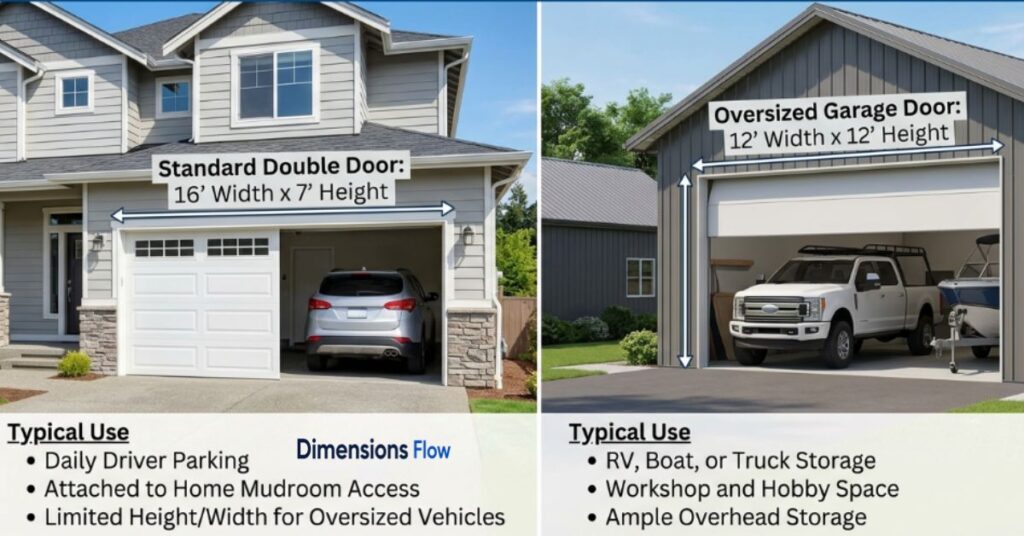
Garage Door Sizes for Attached vs Detached Garages
The type of garage affects sizing decisions.
Attached Garages
Attached garages often prioritize:
- Architectural consistency
- Energy efficiency
- Daily convenience
Door size choices may also influence curb appeal.
Detached Garages
Detached garages offer greater flexibility.
Homeowners frequently use them for:
- Workshops
- Equipment storage
- Vehicle collections
- Recreational vehicles
Larger garage door sizes are common in detached structures.
Impact on Property Appearance
Garage doors can account for a substantial portion of a home’s visible exterior.
Proper sizing improves:
- Visual balance
- Architectural style
- Property value
How to Measure Garage Door Size Correctly
Accurate measurements prevent costly mistakes.
Tools You Need
- Tape measure
- Notepad
- Pencil
- Ladder
Measure the Width
Measure from one side of the finished opening to the other.
Measure the Height
Measure from the floor to the top of the opening.
Measure Headroom
Headroom refers to the space between:
- Top of the opening
- Ceiling
Garage door systems require adequate headroom for tracks and springs.
Measure Side Room
Measure available space on both sides of the opening.
Measure Backroom
Backroom is the distance from the opening to the rear wall.
The garage door must have enough space to fully open.
Common Measuring Mistakes
Avoid:
- Measuring unfinished openings incorrectly
- Ignoring trim
- Forgetting headroom requirements
- Estimating dimensions
Garage Door Rough Opening Dimensions Explained
What Is a Rough Opening?
A rough opening is the framed opening prepared before the garage door installation.
Rough Opening vs Finished Opening
The finished opening is the visible opening after construction is complete.
Builders typically size the rough opening to match the garage door dimensions.
Construction Considerations
When building a new garage, ensure adequate space for:
- Tracks
- Springs
- Openers
- Insulation
Standard Garage Dimensions vs Garage Door Sizes
The garage itself must be large enough to support the chosen door.
Typical One-Car Garage Dimensions
Common sizes include:
- 12′ x 20′
- 12′ x 24′
- 14′ x 24′
Typical Two-Car Garage Dimensions
Common sizes include:
- 20′ x 20′
- 22′ x 22′
- 24′ x 24′
Typical Three-Car Garage Dimensions
Common sizes include:
- 30′ x 20′
- 32′ x 24′
- 36′ x 24′
Why Garage Size Matters
A large garage door cannot compensate for inadequate interior space.
Always evaluate:
- Parking needs
- Storage requirements
- Future vehicle purchases
Custom Garage Door Sizes
Sometimes standard garage door sizes are not enough.
When Standard Sizes Won’t Work
Custom garage doors are useful for:
- Historic homes
- Luxury properties
- RV storage
- Oversized trucks
Benefits of Custom Garage Doors
Advantages include:
- Perfect fit
- Enhanced appearance
- Specialized functionality
Popular Custom Dimensions
Custom widths often exceed:
- 20 feet
- 24 feet
Custom heights frequently exceed:
- 10 feet
- 12 feet
- 14 feet
Cost Considerations
Custom manufacturing increases costs because materials, tracks, springs, and installation requirements become more specialized.
Garage Door Sizes and Prices
The cost of a garage door depends heavily on size.
Average Garage Door Price Ranges
| Garage Door Type | Typical Cost Range |
|---|---|
| Single Garage Door | $600–$2,500 |
| Double Garage Door | $800–$5,000 |
| Insulated Garage Door | $1,000–$6,000+ |
| RV Garage Door | $2,000–$10,000+ |
| Custom Garage Door | Varies significantly |
Prices vary based on materials, insulation, design, and regional labor costs.
Factors That Affect Garage Door Pricing
Key factors include:
- Door size
- Material type
- Insulation level
- Windows
- Decorative hardware
- Smart technology
- Installation complexity
Installation Costs
Professional installation commonly ranges from several hundred to several thousand dollars depending on project scope and door size.
Long-Term Maintenance Costs
Larger doors may require:
- Stronger springs
- More frequent adjustments
- Additional maintenance
Insulated vs Non-Insulated Garage Doors by Size
Does Size Affect Energy Efficiency?
Larger garage doors create a greater potential area for heat transfer.
Insulation becomes increasingly important in extreme climates.
Benefits of Insulated Garage Doors
- Improved comfort
- Reduced energy loss
- Quieter operation
- Increased durability
Are They Worth the Extra Cost?
For attached garages, insulated garage doors often provide long-term value through improved efficiency and comfort.
Modern Garage Door Design Trends by Size
Full-View Glass Garage Doors
Popular in contemporary homes.
Benefits include:
- Modern appearance
- Natural light
- Premium aesthetics
Carriage House Garage Doors
These combine traditional charm with modern operation.
Raised Panel Garage Doors
Raised panel designs remain one of the most common residential styles because they fit a wide range of architectural designs.
Matching Door Size to Style
Large garage doors often become a focal point of the home’s exterior.
Choosing the right design can dramatically improve curb appeal.
Common Garage Door Size Mistakes Homeowners Make
Choosing Based Only on Current Vehicles
Future vehicle purchases should influence sizing decisions.
Ignoring Storage Needs
Many garages store:
- Tools
- Bicycles
- Lawn equipment
- Seasonal decorations
Overlooking Height Requirements
Roof accessories frequently cause clearance issues.
Not Considering Door Swing and Parking Space
Comfort matters as much as basic fit.
Failing to Measure Correctly
Incorrect measurements remain one of the leading causes of garage door installation delays.
“Measure twice, order once” is one of the most valuable rules in garage construction and remodeling.
Frequently Asked Questions
What sizes do garage doors come in?
Standard garage door sizes range from 8–10 feet wide for single doors and 12–20 feet wide for double doors.
How wide is a 10 foot garage door?
A 10-foot garage door is exactly 10 feet (120 inches) wide and is often used for larger vehicles.
Are 9 ft garage doors common?
Yes, 9-foot garage doors are one of the most common sizes for single-car residential garages.
What are the standard sizes for garages?
Typical garage sizes are 12’×20′ for one car, 20’×20′ to 24’×24′ for two cars, and 30’×20′ or larger for three cars.
What is the best size for a garage door?
The best size depends on your vehicle, but 9’×7′ for single garages and 16’×7′ for double garages are popular choices.
Is a 36 door actually 36?
A 36-inch door is generally 36 inches wide, though the rough opening is slightly larger for installation.
Conclusion
Understanding standard garage door sizes is essential for creating a functional, safe, and future-ready garage. While a 9′ x 7′ single garage door and a 16′ x 7′ double garage door remain the most popular choices, modern vehicles often benefit from wider and taller openings. Whether you’re parking a sedan, SUV, pickup truck, or RV, choosing the correct garage door dimensions improves convenience, protects your vehicle, and enhances your property’s value.
Before purchasing a new garage door, take accurate measurements, consider future vehicle needs, and evaluate how much storage and maneuvering space you truly need. A properly sized garage door is an investment that pays off every day through easier access, greater comfort, and long-term functionality.