

The standard magazine size is more than a production measurement it’s a publishing decision that directly affects how readers experience content, how designers build layouts, and how publishers manage costs.
Even in a digital-first world, print magazines remain influential in industries like fashion, editorial journalism, travel, and premium branding. According to the Print Industries Market Information and Research Organization (PRIMIR), print still accounts for a significant share of premium editorial engagement because readers associate physical magazines with credibility and permanence.
At the center of this ecosystem is one key question:
What is the standard magazine size, and why does it dominate publishing worldwide?
In this guide, we break down everything from dimensions and formats to binding types, design workflows, and real-world publishing strategies so you understand not just what the size is, but why it matters strategically.
What Is the Standard Magazine Size?
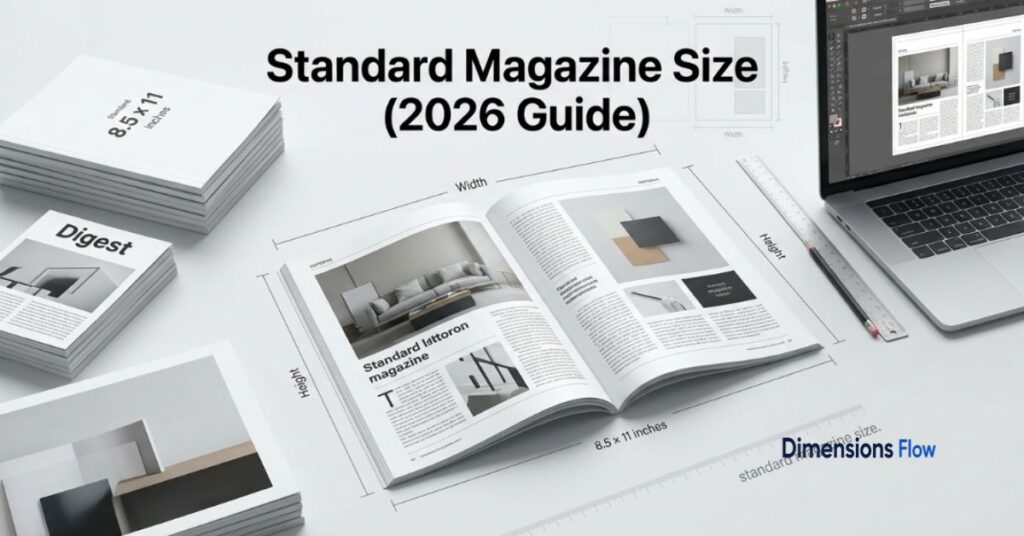
The standard magazine dimensions in the United States and many global publishing markets are:
8.5 × 11 inches (216 × 279 mm)
This format is widely known as letter-size magazine format, and it dominates consumer publishing.
Why this size became the industry standard
The dominance of the 8.5 × 11 inch format is not accidental. It exists because of practical publishing advantages:
- Matches standard office paper size
- Reduces printing and trimming costs
- Works seamlessly with commercial printing presses
- Fits standard mailing and distribution systems
- Provides balanced space for text and imagery
In publishing terms, efficiency drives standardization. Once major magazines adopted this format, the entire supply chain from printers to advertisers optimized around it.
Standard Magazine Dimensions Breakdown (Print Perspective)
Understanding standard magazine size requires more than just width and height. Professional publishing includes technical layers that affect final output.
1. Trim Size vs Bleed Size
| Element | Measurement | Purpose |
|---|---|---|
| Trim Size | 8.5 × 11 in | Final visible page size |
| Bleed Area | +0.125 in per side | Prevents white edges after cutting |
| Safe Zone | ~0.25 in margin | Keeps text away from edges |
These adjustments ensure professional-grade printing without misalignment.
2. Resolution and Print Quality Standards
To maintain sharp visual output:
- Resolution: 300 DPI (dots per inch)
- Color Mode: CMYK (Cyan, Magenta, Yellow, Black)
- Image Quality: High-resolution raster or vector assets
A lower DPI can result in blurred images or unreadable text, which is unacceptable in editorial publishing.
3. Page Layout Structure
Most standard magazines follow structured grid systems:
- 3-column layout (common in editorial pages)
- 4-column layout (news-heavy magazines)
- Modular grid (fashion and design magazines)
This structure ensures:
- Visual balance
- Reader flow
- Advertising placement flexibility
Why 8.5 × 11 Inches Dominates Magazine Publishing
The standard magazine format (8.5 × 11 inches) is used by major publications like Time, People, and National Geographic. Its dominance is driven by both economics and usability.
Key advantages
1. Cost Efficiency
Printing costs are lower because:
- Paper waste is minimized
- Printing sheets are standardized
- Bulk production is optimized
2. Reader Comfort
The size is:
- Easy to hold
- Comfortable for long reading sessions
- Not too large or bulky
3. Design Flexibility
Designers can:
- Include large images
- Balance text-heavy and visual pages
- Create full-page advertisements effectively
4. Industry Compatibility
Almost every printing press is optimized for this format, making production smoother and faster.
Standard Magazine Size vs Other Magazine Formats
Not all magazines use the same dimensions. Different formats serve different publishing goals.
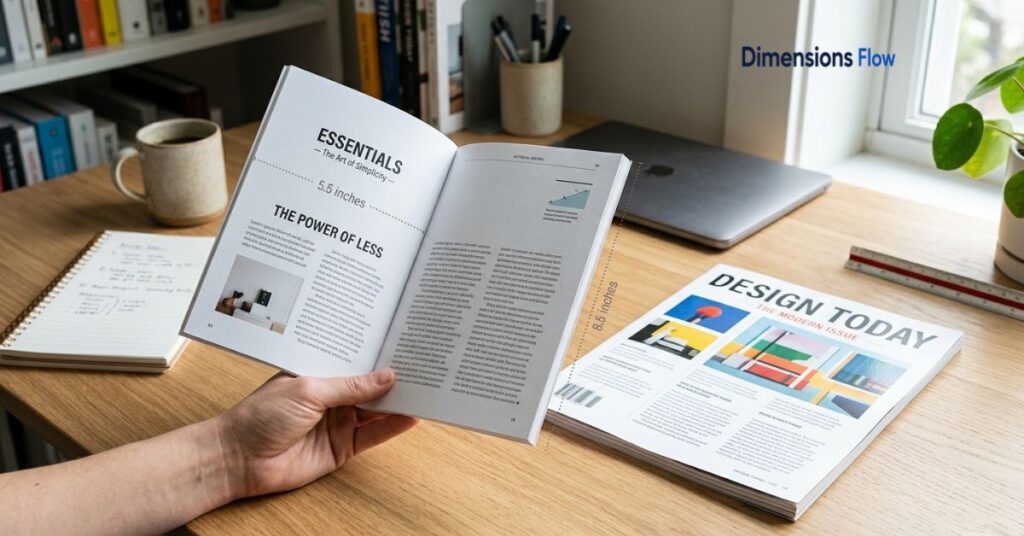
Digest Size (5.5 × 8.5 inches)
- Compact and portable
- Lower production cost
- Limited visual space
Common usage: Reader’s Digest-style publications
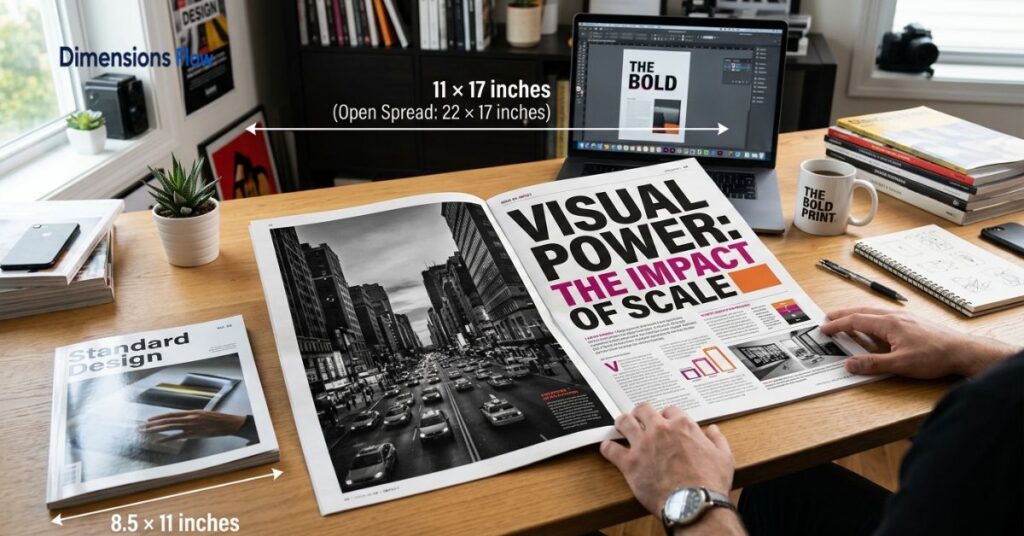
Tabloid Size (11 × 17 inches)
- Large visual impact
- Ideal for photography-heavy magazines
- Often used in entertainment publishing
Advantage: Maximum storytelling space
Disadvantage: Less portable

Pocket Size (3.5 × 5 to 4 × 6 inches)
- Extremely portable
- Used for travel guides and mini-zines
- Minimal design flexibility

Oversized Magazines (9 × 12 inches and above)
- Premium, luxury feel
- Common in fashion and architecture magazines
- High production cost but strong branding impact
How Magazine Size Impacts Design and Readability
The standard magazine dimensions directly influence how content is consumed.
1. Typography and Readability
- Larger pages allow smaller fonts with more spacing
- Smaller formats require tighter layout control
2. Visual Hierarchy
Designers use size to guide attention:
- Headlines dominate upper page areas
- Images break up text blocks
- White space improves readability
3. Reader Engagement
Research in visual cognition shows that structured layouts improve reading retention by up to 20–30% in print media compared to cluttered layouts.
Magazine Binding Types and Their Impact on Dimensions
Binding affects not only durability but also final magazine thickness and usability.
1. Saddle Stitch Binding
- Uses staples through folded sheets
- Best for 8–92 pages
- Most cost-effective option
Best for: Standard magazines and newsletters
2. Perfect Binding
- Glued spine like a paperback book
- Suitable for 28–240 pages
- Premium appearance
Cost increase: ~50–60% more than saddle stitch
Used by:
- Fashion magazines
- High-end editorial publications
3. Wire-O Binding
- Double-loop metal wire
- Allows full flat opening
- Higher durability for frequent use
Used for:
- Manuals
- Planners
- Reference magazines
Standard Magazine Size in Digital Publishing
Print is only one side of modern publishing. Digital magazines require completely different dimensions.
Common Digital Magazine Sizes
| Device | Resolution |
|---|---|
| Desktop | 1024 × 1366 px |
| Tablet | 1536 × 2048 px |
| Mobile | 1080 × 1920 px |
Key differences from print
- Uses RGB color mode instead of CMYK
- Requires responsive layout design
- Includes interactive elements (video, links, animations)
Print vs Digital Magazine Dimensions: Key Differences
Print magazines
- Fixed layout
- High resolution (300 DPI)
- Physical distribution
Digital magazines
- Responsive design
- Lower pixel-based resolution
- Instant global distribution
The shift toward digital has not eliminated print it has redefined its purpose as a premium, tactile medium.
Magazine Cover Size Standards
The standard magazine cover size typically matches interior dimensions:
- 8.5 × 11 inches (standard magazines)
- Additional bleed required for printing
Cover design priorities:
- Strong visual hierarchy
- Minimal but powerful text
- High-resolution imagery
- Brand consistency
Magazine covers are often considered the most important marketing asset of a publication.
How to Design a Standard Magazine Layout (Professional Workflow)
A professional magazine layout follows a structured process:
Step 1: Document Setup
- Set size to 8.5 × 11 inches
- Add 0.125-inch bleed
- Enable facing pages
Step 2: Grid System
- Establish 3–4 column grid
- Maintain consistent spacing
Step 3: Typography Selection
- Limit to 2–3 fonts
- Use hierarchy (headline, subhead, body)
Step 4: Image Placement
- Use high-resolution (300 DPI)
- Maintain alignment with grid structure
Step 5: Final Export
- Export in print-ready PDF format
- Ensure CMYK color consistency
Common Mistakes in Magazine Sizing
Even experienced designers make mistakes when working with standard magazine dimensions.
Most common errors:
- Ignoring bleed settings
- Using low-resolution images
- Incorrect margin spacing
- Overcrowded layouts
- Wrong binding selection for page count
These issues often lead to costly reprints or reduced print quality.
Industry Insight: Why Magazine Size Still Matters in 2026
Despite digital dominance, print magazines continue to survive because they offer something digital cannot:
- Physical permanence
- Premium tactile experience
- Higher perceived credibility
- Collector value
Luxury brands still invest heavily in print magazines because they function as brand storytelling assets, not just content platforms.
As digital fatigue increases, print is increasingly seen as a premium, distraction-free experience.
Expert Tips for Choosing the Right Magazine Size
If you’re selecting a magazine format, consider these strategic factors:
1. Audience Type
- Youth audiences → compact or digital formats
- Professional audiences → standard or oversized formats
2. Budget Constraints
- Lower budget → saddle stitch + standard size
- Higher budget → perfect binding + oversized format
3. Content Type
- Photography-heavy → oversized formats
- Text-heavy → standard or digest size
4. Brand Positioning
- Luxury brands → oversized magazines
- Mass-market brands → standard magazine size
Conclusion
The standard magazine size (8.5 × 11 inches) continues to dominate global publishing because it strikes the perfect balance between cost efficiency, readability, and design flexibility.
While alternative formats like digest, tabloid, and digital magazines serve specific purposes, the standard size remains the most versatile and widely adopted solution in the industry.
In 2026 and beyond, magazine success will not depend only on content quality but also on how effectively the chosen magazine dimensions align with audience behavior, production economics, and brand identity.