
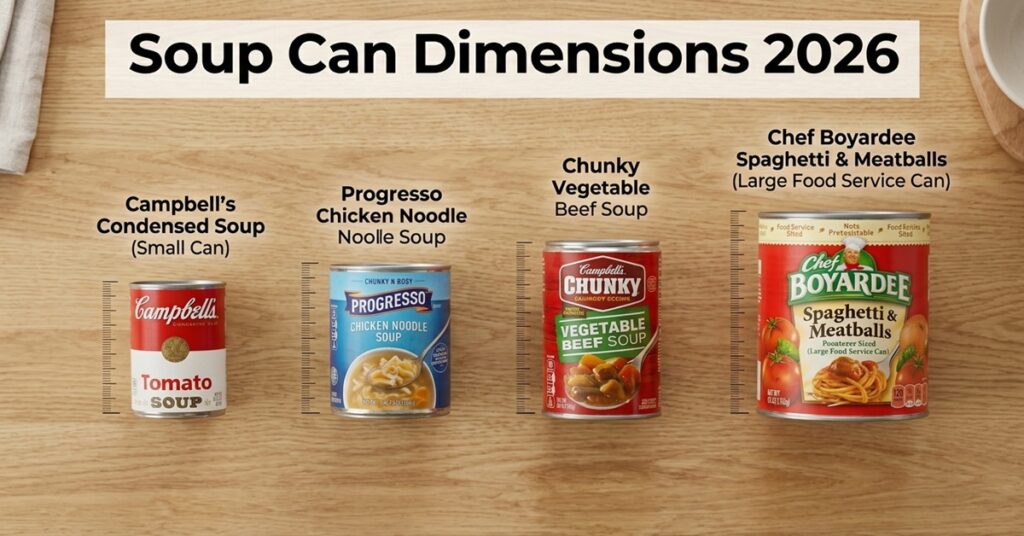

Soup cans are one of those everyday items most people never think twice about until they run into storage issues, recipe confusion, or portion mismatches. Yet understanding soup can dimensions is surprisingly useful. It affects how you plan meals, organize your pantry, compare brands, and even calculate nutrition.
In this guide, we break down everything about soup can sizes, height, diameter, capacity, serving values, and storage behavior, using real industry standards and practical kitchen insights.
What Are Soup Can Dimensions?
Soup can dimensions refer to the physical measurements and volume capacity of canned soup containers. These include:
- Diameter (width of the can)
- Height (top to bottom length)
- Capacity (fluid ounces or milliliters)
- Can code size (industry classification like 300×407 or 307×409)
These standardized measurements help food manufacturers ensure consistency across packaging, shelf storage, and transportation.
Why soup can sizing is standardized
The canned food industry follows long-established sizing conventions developed for efficiency in manufacturing and logistics. According to the Can Manufacturers Institute (CMI), standardized can sizes help:
“Improve supply chain efficiency, reduce packaging variation, and ensure compatibility across filling and sealing equipment.”
In simple terms, standard soup can dimensions make production cheaper and grocery store shelving easier.
Complete Soup Can Size Chart (Industry Standard Reference)
Soup cans are categorized using industry codes such as 300×407 or 307×409. These numbers represent can diameter and height references used in packaging systems.
Common soup can dimensions chart
| Can Size | Common Name | Diameter | Height | Capacity | Typical Use |
|---|---|---|---|---|---|
| 300×407 | Condensed can | 3 in (7.6 cm) | 4.5 in (11.4 cm) | 10.5–10.75 oz | Concentrated soups |
| 307×409 | #2 can (Ready-to-serve) | 3.5 in (8.9 cm) | 4.5 in (11.4 cm) | 18–19 oz | Ready-to-eat soups |
| 401×411 | #2.5 can | 4.01 in | 4.11 in | 28 oz | Family meals |
| 512×562 | #5 can | 5.125 in | 5.625 in | 51 oz | Bulk cooking |
| 603×700 | #10 can | 6.25 in | 7 in | ~100 oz | Food service use |
Why this matters
Even small changes in soup can dimensions significantly impact:
- Shelf space efficiency
- Serving yield
- Shipping costs
- Recipe scaling
Standard Soup Can Dimensions Explained (Real-World Breakdown)
Understanding real-world soup packaging helps connect technical numbers to everyday use.
Condensed Soup Can Dimensions
Condensed soup cans are the most recognizable type in supermarkets.
- Diameter: 3 inches (7.6 cm)
- Height: 4.5 inches (11.4 cm)
- Capacity: 10.5–10.75 oz
A classic example is Campbell’s condensed soup, which has maintained this sizing for decades.
Key characteristics
- Highly concentrated soup
- Requires water or milk before consumption
- Compact design for storage efficiency
Real-world insight
Condensed cans are intentionally smaller because they reduce shipping weight and shelf space while delivering multiple servings once prepared.
Ready-to-Serve Soup Can Dimensions
Ready-to-serve soups (often labeled chunky or homestyle) are larger and more filling.
- Diameter: 3.5 inches (8.9 cm)
- Height: 4.5 inches (11.4 cm)
- Capacity: 18–19 oz
Brands like Campbell’s Chunky and Progresso commonly use this format.
Why they are larger
- No dilution required
- Higher vegetable and meat content
- Designed as full meal replacements
This makes them popular for quick lunches and convenience meals.
Small Soup Can Sizes (Single-Serve Options)
Some brands offer smaller portion-controlled cans.
- Diameter: ~2.6 inches
- Height: ~4 inches
- Capacity: ~7.25 oz
Best uses
- Diet portion control
- Kids’ lunchboxes
- Light snack servings
This segment has grown in popularity due to increasing demand for calorie-controlled diets and on-the-go eating.
Soup Can Dimensions by Brand (Market Comparison)
While sizes are standardized, brands still vary slightly in formulation and packaging design.
Campbell’s Soup Can Dimensions
Campbell’s is the most influential brand in soup can standardization.
- Condensed: 3 in × 4.5 in (10.75 oz)
- Chunky: 3.5 in × 4.5 in (18–19 oz)
Campbell’s iconic red-and-white can design has remained consistent for over 50 years, reinforcing industry standardization.
Why Campbell’s matters
Their sizing became a benchmark for other manufacturers, shaping retail shelf layouts across North America.
Progresso Soup Dimensions
Progresso soups generally follow the 307×409 standard:
- 3.5 inches diameter
- 4.5 inches height
- ~19 oz capacity
They often include:
- Chunky vegetables
- Higher ingredient density
- Ready-to-eat formulations
Organic and Store Brands
Brands like Pacific Foods and Amy’s Organic typically align with:
- Standard ready-to-serve sizing (307×409)
- Occasionally slightly heavier glass or BPA-free lined cans
Key insight
Even premium brands rarely deviate from standard soup can dimensions because retail shelves are optimized around these sizes.
Large Format Soup Can Dimensions (Food Service Use)
Large cans are designed for institutional and commercial kitchens.
#2.5 Can Dimensions
- Diameter: 4.01 inches
- Height: 4.11 inches
- Capacity: 28 oz
Used for:
- Family-size meals
- Small restaurant batches
#5 Can Dimensions
- Diameter: 5.125 inches
- Height: 5.625 inches
- Capacity: ~51 oz
Used for:
- Catering services
- Large batch cooking
#10 Can Dimensions (Industrial Standard)
- Diameter: 6.25 inches
- Height: 7 inches
- Capacity: ~100 oz (≈ 3 liters)
Common applications
- Restaurants
- Cafeterias
- Institutional food service
Key insight
The #10 can is one of the most efficient bulk packaging formats in food service due to its cost-per-serving efficiency.
Soup Can Dimensions in Centimeters (Metric Guide)
To convert inches to centimeters:
1 inch = 2.54 cm
Standard conversions
| Type | Diameter | Height |
|---|---|---|
| Condensed can | 7.6 cm | 11.4 cm |
| Ready-to-serve | 8.9 cm | 11.4 cm |
| #10 can | 15.9 cm | 17.8 cm |
Why metric matters
Metric measurements are essential for:
- International recipe standardization
- Global food manufacturing
- Export/import packaging compliance
Soup Can Capacity vs Serving Size (Important Distinction)
Many people confuse fluid ounces with serving sizes, but they are not the same.
USDA Serving Size Standard
The USDA defines:
1 serving of soup = 1 cup (8 fluid ounces)
But canned soup rarely matches this exactly.
Real Serving Breakdown
- Condensed soup can (10.75 oz)
→ ~1.3 cups before preparation
→ ~2.5 servings after dilution - Ready-to-serve can (18–19 oz)
→ ~2.25 servings
Key takeaway
One can of soup is rarely equal to one serving it often contains multiple servings depending on preparation.
Is One Soup Can Equal to One Cup?
No, and this is one of the most common misconceptions.
- 1 cup = 8 oz
- Most soup cans = 10.5–19 oz
Real example
A condensed soup can contains:
- ~1.3 cups of concentrated soup
- Expands to ~2.5 cups when prepared
This difference matters for:
- calorie tracking
- meal planning
- diet control
Soup Can Length, Height, and Circumference Explained
Soup can “length” is simply another term for height.
Standard Can Height
- Condensed and ready-to-serve: 4.5 inches
- Small cans: ~4 inches
- #10 cans: 7 inches
Circumference Formula (Practical Use)
Formula:
C = π × d
Example calculations
- 3-inch can → 9.42 inches circumference
- 3.5-inch can → ~11 inches circumference
- #10 can → ~19.6 inches circumference
Why it matters
Circumference is important for:
- Label printing
- Packaging design
- Shelf spacing optimization
Soup Can Dimensions for Kitchen Storage Optimization
Understanding soup can sizes helps maximize kitchen efficiency.
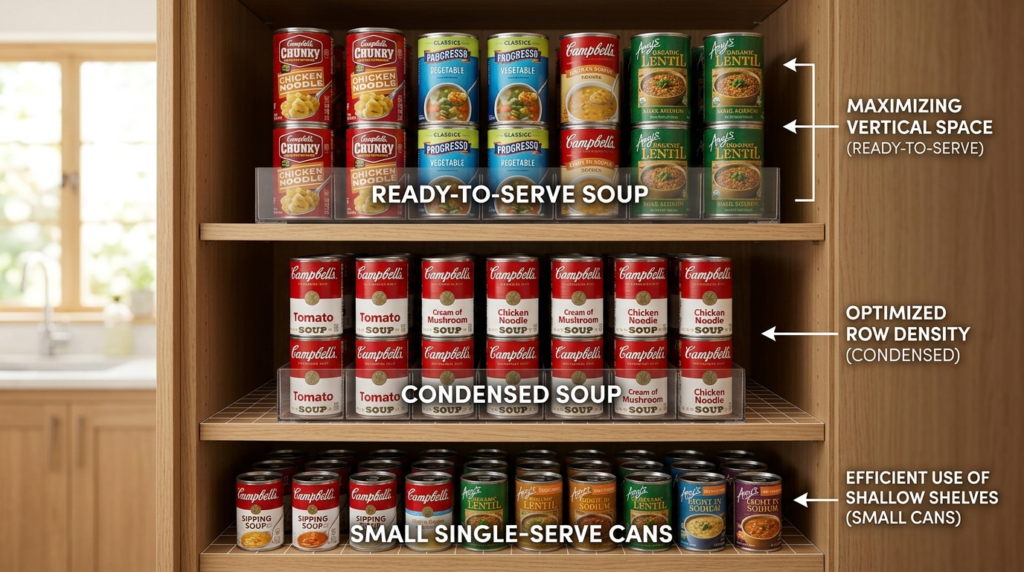
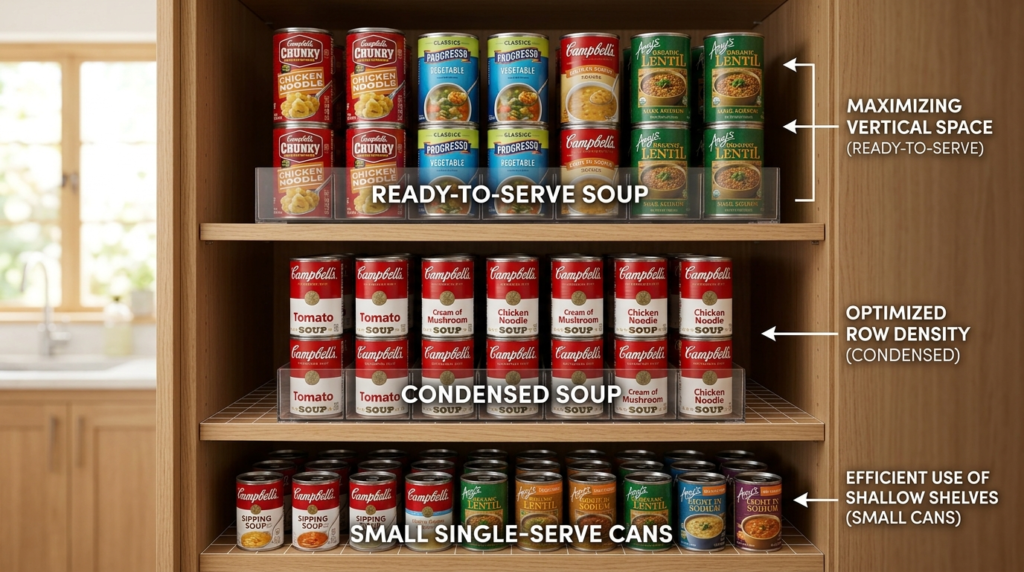
Cabinet Storage Planning
Most kitchen cabinets:
- Depth: ~12 inches
- Shelf height: 10–12 inches
Storage efficiency
- 3-inch cans → 4 cans per row
- 3.5-inch cans → 3 cans per row
Pantry Organization Strategy
Best practices:
- Stack no more than 3 cans high
- Group by type (condensed vs ready-to-serve)
- Use FIFO method (first in, first out)
Refrigerator Storage After Opening
Once opened:
- Do NOT store soup in original can
- Transfer to airtight container
Food safety guideline
Refrigerated soup lasts:
- 3–4 days safely
How Soup Can Dimensions Affect Shopping Decisions
Understanding soup can dimensions helps consumers:
- Compare price per ounce
- Choose correct portion sizes
- Avoid overbuying or underbuying
Real-world insight
Larger cans often provide:
- lower cost per ounce
- better value for families
Smaller cans provide:
- better portion control
- less food waste
Related Packaging Dimension Guides
Soup cans follow the same design logic as other packaged foods:
- Soda can dimensions
- Snack tube packaging (e.g., chips)
- Food service bulk cans
Understanding one helps understand all.
FAQs
What are the dimensions of a soup can?
Standard condensed soup cans measure 3 inches in diameter and 4.5 inches in height. Ready-to-serve cans are slightly larger at 3.5 inches by 4.5 inches.
How many centimeters is a soup can?
A typical soup can is about 7.6–8.9 cm in diameter and 11.4 cm tall, depending on the type.
What size is a Campbell’s soup can?
Condensed: 3 in × 4.5 in
Chunky: 3.5 in × 4.5 in
How long is canned soup?
Most canned soups are about 4.5 inches tall, while larger food service cans can reach 7 inches.
Is one can of soup equal to one cup?
No. Most cans contain more than 1 cup, typically between 1.3 and 2.25 cups depending on type.
Conclusion
Understanding soup can dimensions goes far beyond simple measurements. It influences how food is packaged, stored, sold, and consumed.
From condensed soup cans to industrial #10 cans, each size serves a specific purpose in the food ecosystem whether for home kitchens, restaurants, or large-scale food service operations.
By knowing these dimensions, you can:
- Plan meals more efficiently
- Organize pantry space better
- Compare products accurately
- Improve portion control and nutrition tracking
In short, soup can sizing is a small detail with surprisingly big practical value.