

Choosing the right mobility device is not just about seat size or comfort it starts with understanding weight. A wheelchair weight chart helps users compare different models based on frame weight, usability, portability, and support capacity. Whether you are a first-time buyer, caregiver, or healthcare professional, knowing how wheelchair weight affects daily life can make a major difference in independence and safety.
This guide breaks down everything in a practical, easy-to-understand way: real weight ranges, material differences, usage scenarios, and expert-backed selection tips. Instead of overwhelming technical jargon, you’ll find clear explanations that help you make a confident decision.
Why Wheelchair Weight Matters More Than Most People Realize
Wheelchair weight is often underestimated during selection. Many users focus on seat width or price, but the actual frame weight directly affects how the chair performs in real life.
A lighter wheelchair can improve independence, while a heavier one may offer better stability and durability. The balance between these two factors is what makes a wheelchair weight chart so valuable.
Key reasons wheelchair weight is important:
- Mobility effort: Heavier chairs require more force to self-propel
- Transport convenience: Lightweight models are easier to fold and lift into vehicles
- Caregiver strain: A heavy wheelchair increases physical burden for attendants
- Daily fatigue: Weight impacts long-term energy use for users
- Portability: Travel-friendly chairs must stay under certain weight limits
In real-world use, even a difference of 5–10 lbs can significantly affect usability over time.
Understanding the Wheelchair Weight Chart (Core Concept Explained)
A wheelchair weight chart categorizes wheelchairs based on their frame weight and intended use. It helps compare models across different mobility needs instead of relying on brand descriptions alone.
Before exploring the chart, it’s important to understand two key definitions:
Frame weight vs total system weight
- Frame weight: The wheelchair without the user or accessories
- Total system weight: Includes cushions, footrests, armrests, and accessories
Manufacturers often advertise frame weight, but real-world usability depends on total weight.
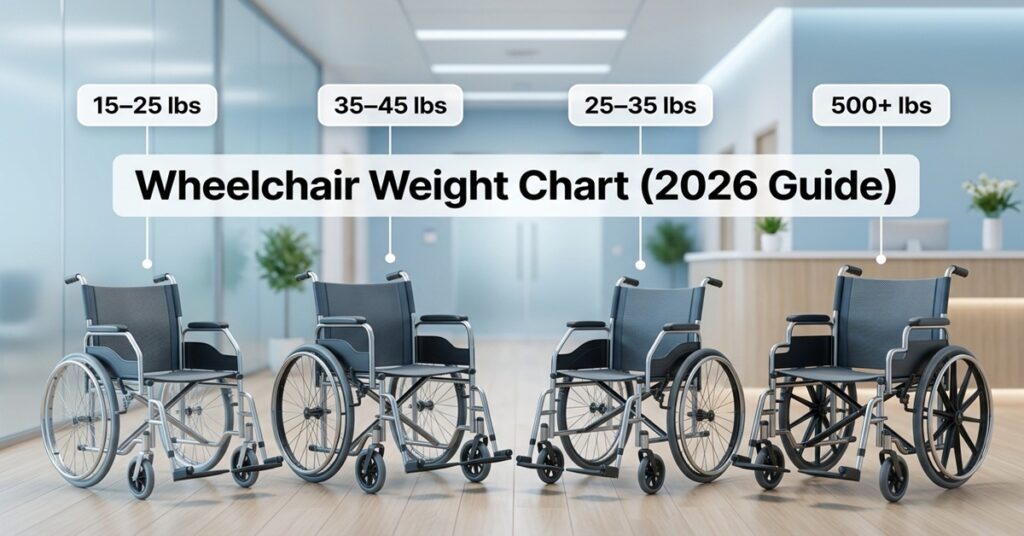
Complete Wheelchair Weight Chart (2026 Comparison Guide)
Below is a practical breakdown of common wheelchair categories and their typical weight ranges.
| Wheelchair Type | Frame Weight Range | Weight Capacity | Best Use Case |
|---|---|---|---|
| Transport Wheelchair | 15–25 lbs | Varies | Short trips, caregiver-assisted mobility |
| Standard Manual Chair | 25–40 lbs | Up to 300 lbs | Everyday use, balanced mobility |
| Lightweight Wheelchair | 20–30 lbs | Up to 250–300 lbs | Travel, self-propulsion |
| Heavy-Duty Wheelchair | 35–50+ lbs | 300–500 lbs | Durable long-term use |
| Bariatric Wheelchair | Varies (heavy) | 500–700 lbs | High-support requirements |
This wheelchair weight chart highlights how design purpose directly influences weight. A travel chair prioritizes portability, while a bariatric model prioritizes strength and reinforcement.
Wheelchair Weight Categories Explained in Detail
Transport Wheelchairs (15–25 lbs)
Transport wheelchairs are the lightest category. They are designed for short-distance use and require a caregiver for movement.
Key features:
- Small rear wheels
- Foldable frame
- Highly portable design
Best for:
- Hospital visits
- Travel assistance
- Temporary mobility needs
Limitation:
- Not suitable for self-propulsion
Standard Manual Wheelchairs (25–40 lbs)
This is the most commonly used category globally. It offers a balance between durability and usability.
Key features:
- Medium-weight steel or aluminum frame
- Larger rear wheels for self-propulsion
- Stable structure for daily use
Best for:
- Long-term everyday mobility
- Indoor and outdoor use
Lightweight Wheelchairs (20–30 lbs)
Lightweight models are increasingly popular because they reduce physical strain.
Key features:
- Aluminum frame construction
- Easier folding mechanism
- Reduced propulsion resistance
Best for:
- Active users
- Frequent travelers
- Users with upper body strength limitations
Heavy-Duty Wheelchairs (35–50+ lbs)
These chairs prioritize strength and durability over portability.
Key features:
- Reinforced frame structure
- Wider seating
- Stronger wheels and axles
Best for:
- Long-term use
- Rough terrain conditions
- Users requiring extra stability
Bariatric Wheelchairs (Varies, High Capacity Models)
Bariatric wheelchairs are designed for high weight support and durability.
Key features:
- Extra-wide seats (24–30 inches or more)
- Reinforced steel frames
- Heavy-duty wheels and crossbars
Best for:
- Users requiring 500–700 lbs support capacity
Wheelchair Weight vs Weight Capacity: A Critical Distinction
One of the most common mistakes users make is confusing wheelchair weight with weight capacity.
Key difference:
- Wheelchair weight: How heavy the chair is
- Weight capacity: How much weight the chair can safely support
A lightweight chair may still support a heavy user if designed with strong materials.
Why this matters:
- Safety risk if capacity is exceeded
- Frame damage over time
- Reduced stability during movement
In accessibility standards, engineers always design for load safety margins, meaning real-world capacity should never be tested at maximum limit.
How Wheelchair Materials Affect Weight and Performance
Material choice plays a major role in determining overall wheelchair weight.
Steel frames
- Heaviest option
- Extremely durable
- Common in budget models
Aluminum frames
- Balanced weight and strength
- Most common in modern wheelchairs
- Easier to push and transport
Titanium frames
- Premium lightweight option
- High strength-to-weight ratio
- Expensive but long-lasting
Real-world impact:
- Aluminum chairs reduce propulsion effort significantly
- Steel chairs offer stability but increase fatigue
- Titanium improves performance for active users
How Wheelchair Weight Impacts Daily Life
Understanding a wheelchair weight chart is not just technical it directly affects daily experiences.
Transportation impact
Heavier wheelchairs are harder to:
- Lift into vehicles
- Store in compact spaces
- Carry during travel
Mobility effort
- Lightweight chairs reduce energy use
- Heavy chairs increase upper body fatigue
Caregiver assistance
Caregivers benefit greatly from lighter chairs, especially when lifting or pushing over long distances.
How to Choose the Right Wheelchair Weight
Choosing the right weight category depends on lifestyle, physical strength, and environment.
Step 1: Identify usage pattern
- Indoor only
- Indoor + outdoor
- Travel-heavy lifestyle
Step 2: Assess user strength
- Self-propel users need lighter chairs
- Assisted users can use heavier models
Step 3: Consider environment
- Narrow hallways require lighter, compact frames
- Outdoor use may require heavier stability
Step 4: Evaluate transport needs
- Frequent travel = lightweight category
- Home use = standard category
Hidden Factors That Influence Real Wheelchair Weight
Even if two wheelchairs appear similar, real weight may differ due to hidden factors.
Important hidden contributors:
- Cushion type and padding
- Wheel size and material
- Footrests and armrests
- Folding mechanism complexity
- Additional safety attachments
These elements can add several pounds without being obvious in specifications.
Common Mistakes When Using a Wheelchair Weight Chart
Many buyers misinterpret wheelchair specifications.
Frequent mistakes:
- Choosing based only on lowest weight
- Ignoring durability requirements
- Overlooking user strength limitations
- Confusing transport chairs with manual wheelchairs
- Not considering future mobility changes
Avoiding these mistakes improves long-term comfort and safety.
Expert Tips for Better Wheelchair Selection
Mobility specialists often emphasize practical testing over numbers alone.
Key expert recommendations:
- Always test pushing effort before purchase
- Check folding weight if travel is required
- Consider long-term health changes
- Prioritize comfort over minimal weight
- Ensure weight capacity exceeds user needs comfortably
A good rule is to choose a chair that feels easy to move even after 10–15 minutes of use.
Real-World Example: Why Weight Difference Matters
Two users with similar body weight may choose different wheelchairs:
- User A selects a 25 lb lightweight chair for daily commuting
- User B chooses a 38 lb standard chair for stability on uneven ground
Both choices are correct because mobility needs differ. This is why a wheelchair weight chart should always be used as a guide not a strict rule.
Frequently Asked Questions
What is the average wheelchair weight?
Most manual wheelchairs weigh between 25 and 40 lbs depending on frame material and design.
Is a lighter wheelchair always better?
Not always. Lighter chairs improve portability but may reduce stability and durability.
What is the lightest wheelchair type?
Transport wheelchairs are usually the lightest, ranging from 15 to 25 lbs.
Does wheelchair weight affect speed?
Yes. Lighter chairs generally require less effort, improving propulsion efficiency.
What is more important: weight or capacity?
Both are equally important. Weight affects usability, while capacity affects safety.
Conclusion
A wheelchair weight chart is more than a comparison table it is a practical decision-making tool that directly impacts independence, safety, and comfort.
The best wheelchair is not always the lightest or the strongest. It is the one that fits your body, your environment, and your lifestyle.
When selecting a wheelchair, focus on:
- Real-world usability instead of numbers alone
- Long-term comfort and energy efficiency
- Proper balance between weight and durability
By understanding wheelchair weight categories deeply, users can make smarter, safer, and more confident mobility choices.